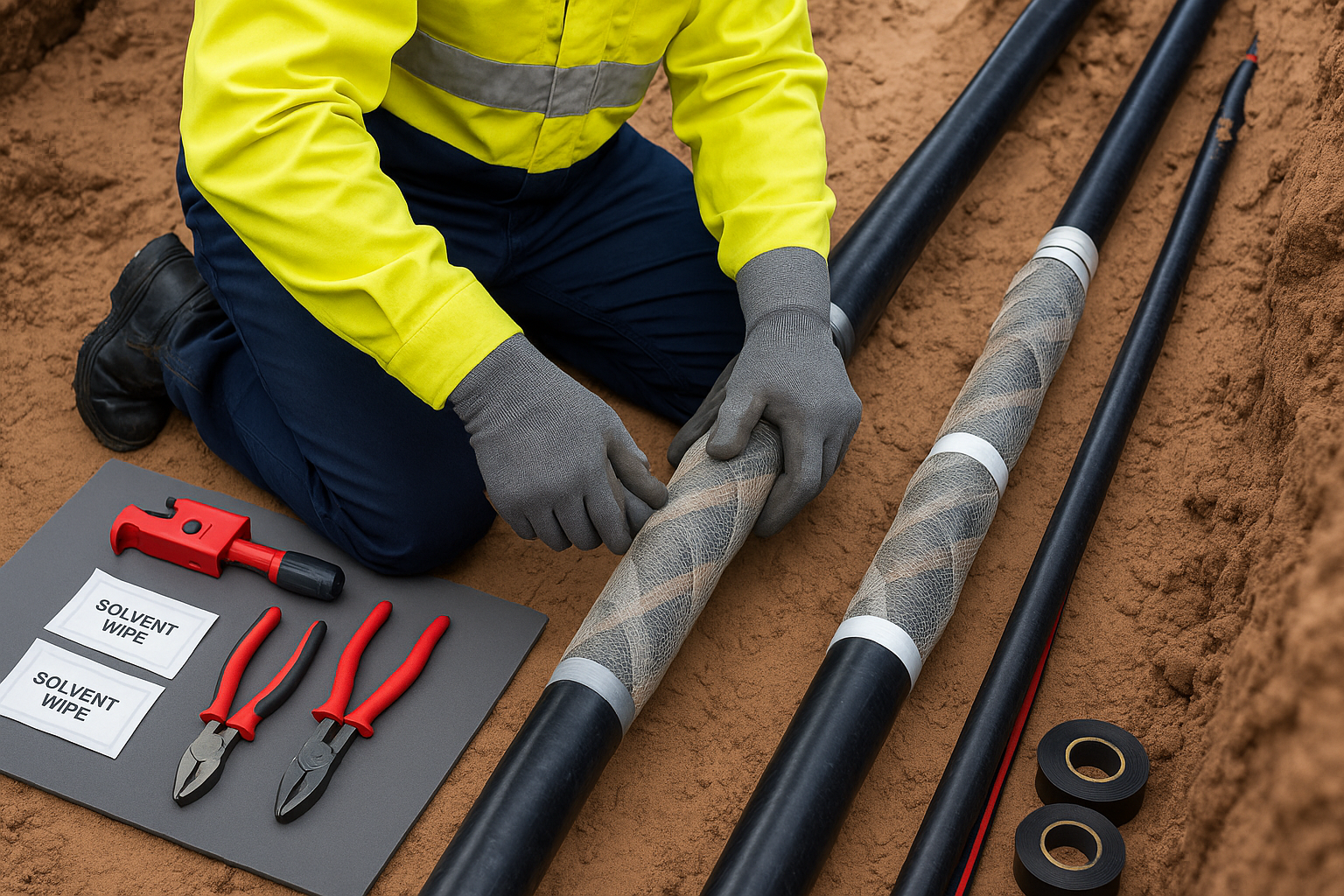
Course Code:
CTS_na_cable_prep_GEN_ 002
NON-ACCREDITED, CABLE preparARTION COURSE FOR HIGH VOLTAGE CABLES, FOR TEMINATION AND test high voltage TO underground polymeric cable
This is a non accredited course offering
-
The course is designed to provide the learner with the knowledge and skills to enable them to safely prepare medium voltage cable to 11kVjoint, remove semi conductive layers terminate and conduct insulation testing at 5kV of test o high voltage underground polymeric cables
-
The target learners for this course are electrical employees currently working within the Australian Electricity Supply Industry or private networks. This includes employees of network asset owners, contractors and sub-contractors in electricity Generation, Transmission Distribution, and mine sites.
Those who work in networks must maintain currency of skills and competency in a range of safety and technical knowledge and skills. Relevant safety related training programs are often mandated by regulation or industry agreements and documented in state codes of practice.
Most learners will be licensed and trade qualified or hold a Certificate in a related technical discipline. In addition to trade qualifications, the learner groups will have completed a range of electrical and plant safety related training programs related to the roles they hold.
Due to the significant safety risks in the industry these employees work within highly proceduralised workplaces with mature workplace safety systems.
Workers in the industry are required to regularly complete workplace safety risk assessment and work planning documentation and therefore bring a solid foundational understanding of risk assessment and workplace safety documentation concepts and practices to the program.
-
Delivery includes
Trainer led classroom presentations
Theory assessment
Workshop practical exercises and assessment
-
On successful completion of the course a participant will be able to:
Understand and comply with relevant regulations and enterprise procedures.
Understand and identify the hazards associated with the work activity, site and site equipment.
Prepare to install joints to de-energised HV underground polymeric cables.
Complete installation of joints and terminations on de-energised HV underground polymeric cables.
Perform insulation resistance testing on completed joints and terminations on de-energised HV underground polymeric cables.
-
1 day (8 hrs)
-
Learners are required to have the following to participate in this course:
Personal Protective Equipment (e.g. Hard Hat, Safety Footwear, Approved Hi-Vis Clothing, Safety Glasses)
Stationary (e.g. Pen, Pencil, etc.)
Hand tools which may include, pliers, long nose pliers, tape measure, rat tail file, hacksaw and any general hand tools. If you do not have some of these tools, CTS will have tools available on the day.
-
Learners will be assessed using a combination of the following methods:
Theory/Written Assessment (e.g. Short Answer Questions, Multiple Choice, Verbal Questioning Interview)
Direct Observation/Practical Assessment (e.g. completion of joint and/or termination on a de-energised HV polymeric cable).
-
To participate in this course, learners are required to have:
CIII in Electrotechnology or equivalent.
NSW Department of Fair Trading unrestricted Electrical Qualified Supervisors Certificate or equivalent.
be literate in spoken English and competent in reading, writing, and numeracy (Language ACSF 3, Literacy ACSF 3, Numeracy ACSF 3)
be sufficiently fit to participate.
-
This CTS program/course is a non accredited skills development course.
Upon successful completion, learners will receive a certificate of attendance and completion.
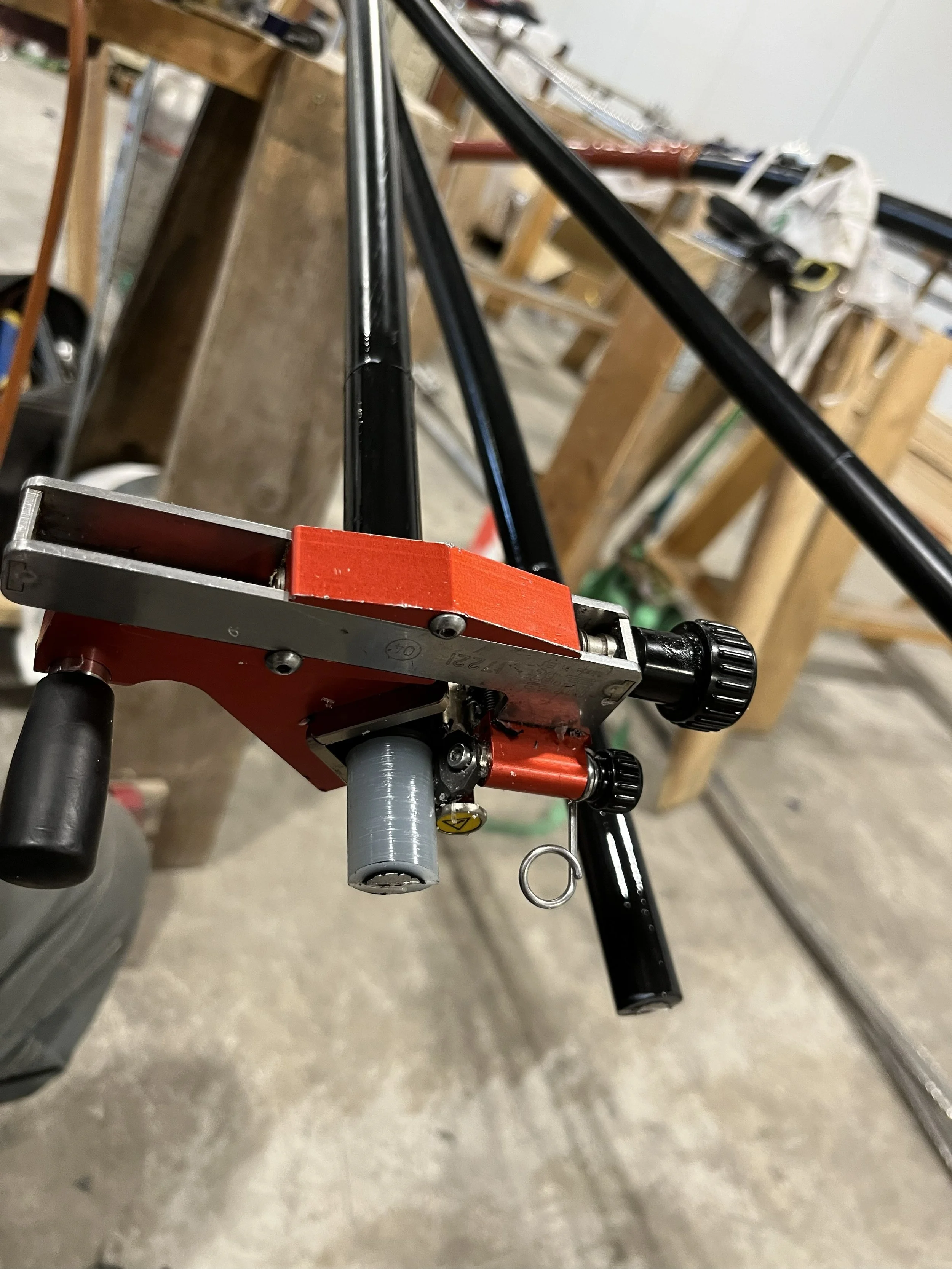
Course Code:
CTS_na_bond_SEMI_PREP_006
NON-ACCREDITED, CABLE PreparATION FOR FULLY BONDED SEMI CONDUCTIVE LAYER ON underground polymeric cable
-
The course is designed to provide the learner with the knowledge and skills to enable them to safely joint, terminate and conduct insulation testing of test high voltage underground polymeric cables
-
The target learners for this course are employees currently working within the Australian Electricity Supply Industry. This includes employees of network asset owners, contractors and sub-contractors in electricity Generation, Transmission and Distribution.
Those who work on the network must maintain currency of skills and competency in a range of safety and technical knowledge and skills. Relevant safety related training programs are often mandated by regulation or industry agreements and documented in state codes of practice.
Most learners will be licensed and trade qualified or hold a Certificate in a related technical discipline. In addition to trade qualifications, the learner groups will have completed a range of electrical and plant safety related training programs related to the roles they hold.
Due to the significant safety risks in the industry these employees work within highly proceduralised workplaces with mature workplace safety systems.
Workers in the industry are required to regularly complete workplace safety risk assessment and work planning documentation, and therefore bring a solid foundational understanding of risk assessment and workplace safety documentation concepts and practices to the program.
-
Delivery includes
Trainer led classroom presentations
Theory assessment
Workshop practical exercises and assessment
-
On successful completion of the course a participant will be able to:
Understand and comply with relevant regulations and enterprise procedures.
Understand and identify the hazards associated with the work activity, site and site equipment.
Prepare to install joints to de-energised HV underground polymeric cables.
Complete installation of joints and terminations on de-energised HV underground polymeric cables.
Perform insulation resistance testing on completed joints and terminations on de-energised HV underground polymeric cables.
-
1 day (8 hrs)
-
Learners are required to have the following to participate in this course:
Personal Protective Equipment (e.g. Hard Hat, Safety Footwear, Approved Hi-Vis Clothing, Safety Glasses)
Stationary (e.g. Pen, Pencil, etc.)
-
Learners will be assessed using a combination of the following methods:
Theory/Written Assessment (e.g. Short Answer Questions, Multiple Choice, Verbal Questioning Interview)
Direct Observation/Practical Assessment (e.g. completion of joint and/or termination on a de-energised HV polymeric cable).
-
To participate in this course, learners are required to have:
CIII in Electrotechnology or equivalent.
NSW Department of Fair Trading unrestricted Electrical Qualified Supervisors Certificate or equivalent.
be literate in spoken English and competent in reading, writing, and numeracy (Language ACSF 3, Literacy ACSF 3, Numeracy ACSF 3)
be sufficiently fit to participate.
-
This CTS program/course is a non accredited skills development course.
Upon successful completion, learners will receive a certificate of attendance and completion.
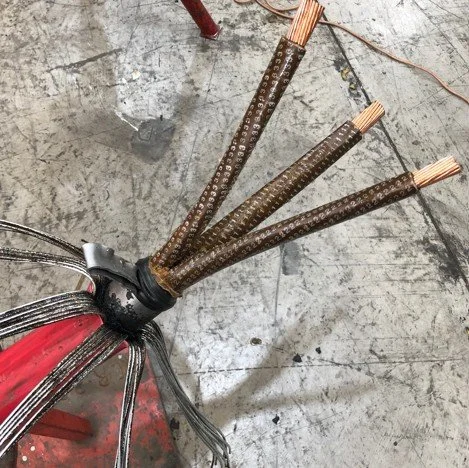
Course Code:
CTS_NA_CABLE_pOLy_PILC_ 005
GENERAL INTRODUCTION TO prepare and install transition joints between polymeric cable and paper insulated cables
-
The course is designed to provide the learner with the knowledge and skills to enable them too safely joint PILC (paper Lead) to XLPE (Polymeric cables)
This enables the student to master
Lead wiping
Compression spring technology
The class will be exposed to SWA (Steel Wire Armouring) and other styles of PILC cables.
LV Consac cables are also taught in this module
-
The target learners for this course are employees currently working within the Australian Electricity Supply Industry. This includes employees of network asset owners, contractors and sub-contractors in electricity Generation, Transmission and Distribution.
Those who work on the network must maintain currency of skills and competency in a range of safety and technical competencies. Relevant safety related training programs are often mandated by regulation or industry agreements and documented in state codes of practice.
Most learners will be licensed and trade qualified or hold a Certificate in a related technical discipline. In addition to trade qualifications, the learner groups will have completed a range of electrical and plant safety related training programs related to the roles they hold. Due to the significant safety risks in the industry these employees work within highly proceduralised workplaces with mature workplace safety systems.
Workers in the industry are required to regularly complete workplace safety risk assessment and work planning documentation, and therefore bring a solid foundational understanding of risk assessment and workplace safety documentation concepts and practices to the program.
Workers who encounter and need to facilitate transition between HV Paper Insulated Lead Sheathed and HV Polymeric cables.
-
Trainer led classroom presentations
Theory assessment
Workshop practical exercises and assessment
Lead wiping and compression spring installation
-
On successful completion of the course a participant will be able to:
Understand and comply with relevant regulations and enterprise procedures.
Understand and identify the hazards associated with the work activity, site and site equipment.
Prepare to install transition joint between de-energised HV underground polymeric cable and HV Paper Insulated, Lead Sheathed cable.
Complete installation of transition joint between de-energised HV underground polymeric cable and HV Paper Insulated, Lead Sheathed cable.
Perform insulation resistance testing on completed transition joint between de-energised HV underground polymeric cable and HV Paper Insulated, Lead Sheathed cable.
Apply lead wiping techniques to HV Paper Insulated, Lead Sheathed cable.
Apply correct techniques for removal of Steel Wire and cleaning of sheathing of HV Paper Insulated, Lead Sheathed cable.
Apply correct techniques to repair the sheath of HV Paper Insulated, Lead Sheathed cable.
Understand the function and importance of insulating oils within HV Paper Insulated, Lead Sheathed cable.s
-
2 days (16 Hrs)
-
Personal Protective Equipment (e.g. Hard Hat, Safety Footwear, Approved Hi-Vis Clothing, Safety Glasses)
Stationary (e.g. Pen, Pencil, etc.)
Tools are optional. CTS does recommend you bring your own tools
-
Theory/Written Assessment (e.g. Short Answer Questions, Multiple Choice, Verbal Questioning Interview)
Direct Observation/Practical Assessment (e.g. Preparation and completion of HV transition joint between HV XLPE and PILS cable )
-
To participate in this course, learners are required to have:
CIII in Electrotechnology or equivalent.
NSW Department of Fair Trading unrestricted Electrical Qualified Supervisors Certificate or equivalent.
be literate in spoken English and competent in reading, writing, and numeracy (Language ACSF 3, Literacy ACSF 3, Numeracy ACSF 3)
be sufficiently fit to participate.
-
This CTS program/course is a non accredited skills development course.
Upon successful completion, learners will receive a certificate of attendance and completion.
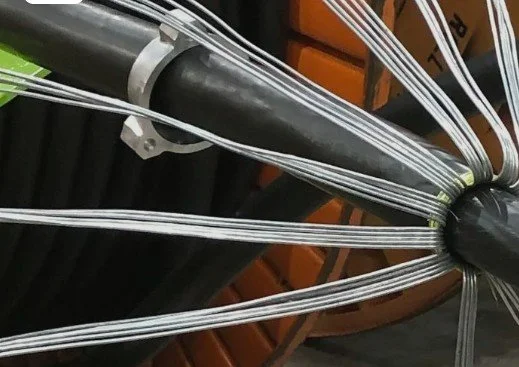
Course Code:
CTS_NA_SWA_PREP_POLY_003
Preperation of tRAILING swa xlpe AND MINING CABLES for joints and terminations
-
The course is designed to provide the learner with the knowledge and skills to enable them too safely joint PILC (paper Lead) to XLPE (Polymeric cables)
This enables the student to master
Lead wiping
Compression spring technology
The class will be exposed to SWA (Steel Wire Armouring) and other styles of PILC cables.
LV Consac cables are also taught in this module
-
The target learners for this course are employees currently working within the Australian Electricity Supply Industry. This includes employees of network asset owners, contractors and sub-contractors in electricity Generation, Transmission and Distribution.
Those who work on the network must maintain currency of skills and competency in a range of safety and technical competencies. Relevant safety related training programs are often mandated by regulation or industry agreements and documented in state codes of practice.
Most learners will be licensed and trade qualified or hold a Certificate in a related technical discipline. In addition to trade qualifications, the learner groups will have completed a range of electrical and plant safety related training programs related to the roles they hold. Due to the significant safety risks in the industry these employees work within highly proceduralised workplaces with mature workplace safety systems.
Workers in the industry are required to regularly complete workplace safety risk assessment and work planning documentation, and therefore bring a solid foundational understanding of risk assessment and workplace safety documentation concepts and practices to the program.
Workers who encounter the older style of cables, paper lead and need to transition to Polymeric cables.
-
Trainer led classroom presentations
Theory assessment
Workshop practical exercises and assessment
Logbook of workplace activities.
Lead wiping and compression spring installation
-
On successful completion of the course a participant will be able to:
Understand and comply with relevant regulations and enterprise procedures;
Understand and identify the hazards associated with the work activity, site and site equipment.
Complete installation and maintenance of de-energised XLPE Polymeric cables too PILC underground
How to lead wipe PILC cables
The correct way of removal of SWA and cleaning lead sheaths.
Repairs to lead sheaths if too much heat is applied
understanding of why the oils are so important in PILC cables.
-
5 days
-
Personal Protective Equipment (e.g. Hard Hat, Safety Footwear, Approved Hi-Vis Clothing, Safety Glasses)
Stationary (e.g. Pen, Pencil, etc.)
Tools are optional. CTS does recommend you bring your own tools
-
Theory/Written Assessment (e.g. Short Answer Questions, Multiple Choice, Verbal Questioning Interview)
Direct Observation/Practical Assessment (e.g. Workplace, Simulated Environment, Role Play/Scenario)
Portfolio (e.g. Logbook of Workplace Activities, Third Party Reports)
-
To participate in this course, learners are required to have:
CIII in Electrotechnology or equivalent.
NSW Department of Fair Trading unrestricted Electrical Qualified Supervisors Certificate or equivalent.
be literate in spoken English and competent in reading, writing, and numeracy (Language ACSF 3, Literacy ACSF 3, Numeracy ACSF 3)
be sufficiently fit to participate.
-
This CTS program/course is a non accredited skills development course.
Upon successful completion, learners will receive a certificate of attendance and completion.
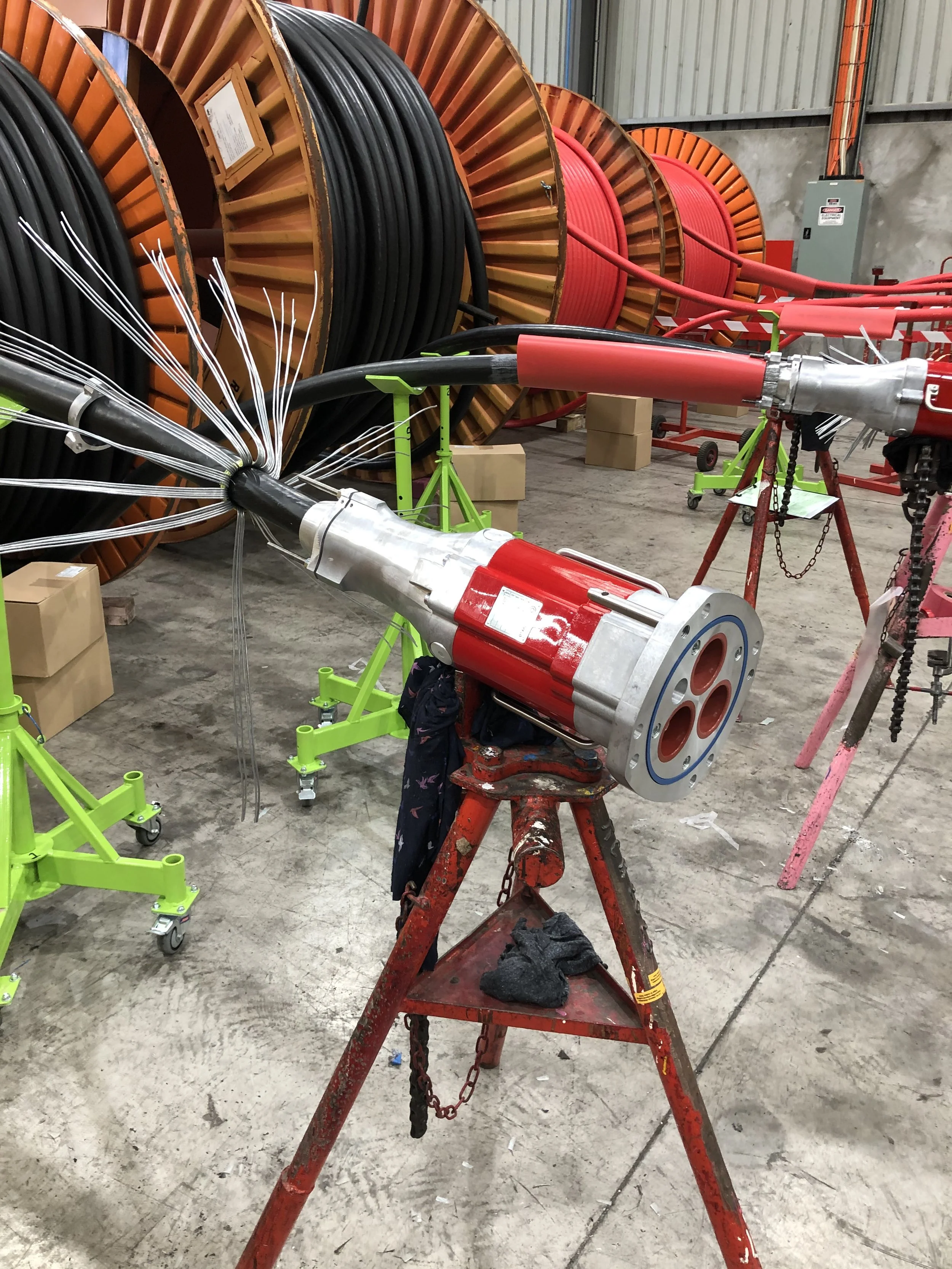
Course Code: CTS_NA_MINE_plug_PREP_004
PREPARING MINING PLUGS ON MINING CABLES
-
The course is designed to equip learners with the knowledge and skills required to safely install a mining plug onto a mining cable. Participants will master the correct stripping techniques for mining cables and learn how to install a 6.6kV mining plug onto a mining cable. The training includes exposure to various types of mining cables to broaden understanding. Upon completion of this course, students will be proficient in installing a mining plug onto a rubber mining cable.
-
The target learners for this course are employees currently working within the mining Electricity Supply Industry or intend to work in the mining industry. This includes employees of network asset owners, contractors and sub-contractors in electricity Generation, Transmission and Distribution and cable shop workers in the mining industry.
Learners must have a sound technical knowledge of mining cables and plugs. safety related training programs are often mandated by regulation or industry agreements and documented in state codes of practice.
The minimum requirement for this course,
electrotechnology and ideally hold a licensed and trade qualified or hold a Certificate in a related technical discipline.
In addition to trade qualifications, the learner groups will have completed a range of electrical and plant safety related training programs related to the roles they hold.
Due to the significant safety risks in the industry these employees work within highly proceduralised workplaces with mature workplace safety systems.
People who do not hold trade qualifications are required to have worked in a cable shop for a minimum of 2 years. Nontrade people can still apply.
-
Trainer led classroom presentations
Theory assessment
Workshop practical exercises and assessment
-
Item description
-
1x full 8hr day
-
Personal Protective Equipment (e.g. Hard Hat, Safety Footwear, Approved Hi-Vis Clothing, Safety Glasses)
Stationary (e.g. Pen, Pencil, etc.)
Tools are optional. CTS does recommend you bring your own too
-
Theory/Written Assessment (e.g. Short Answer Questions, Multiple Choice, Verbal Questioning Interview)
Direct Observation/Practical Assessment (e.g. Workplace, Simulated Environment, Role Play/Scenario)
-
To participate in this course, learners are required to have:
Certificate III in Electrotechnology or equivalent.
NSW Department of Fair Trading unrestricted Electrical Qualified Supervisors Certificate or equivalent
OR
Worked in a cable repair shop environment for over 2yrs and meet their organisation requirements to preform cable preparation and repair tasks. (evidence is required).
be literate in spoken English and competent in reading, writing, and numeracy (Language ACSF 2, Literacy ACSF 3, Numeracy ACSF 2)
be sufficiently fit to participate.
-
This CTS program/course is a non accredited skills development course.
Upon successful completion, learners will receive a certificate of attendance and completion which is numbered. Certificate records are retained by CTS.