
Electrical systems Isolation and Lock Out/Tag Out
COURSE CODE: CTS_NA_ELEC_LOTO_012
-
The program is designed to strengthen and extend your practical capability in safely isolating electrical and mechanical plant and applying Lock-Out/Tag-Out systems.
It supports ongoing professional development by building deeper understanding of:
Legislative and regulatory requirements for isolations and LOTO
Enterprise procedures, site protocols, and permit-to-work systems
Energy-hazard identification and risk control
Applying and verifying isolations across electrical, mechanical, hydraulic, pneumatic, chemical, thermal, and stored-energy systems
Communicating isolations, handover processes, and reinstatement procedures
The course focuses on real-world workplace scenarios that reflect current industry expectations, ensuring your isolation practices are safe, compliant, and technically accurate.
-
This course is designed for licensed electricians, mechanical fitters, plant operators, and electrical or mechanical technicians working within the Australian Electricity Supply Industry, heavy industry, manufacturing, mining, utilities, and private industrial networks.
It is ideal for employees, contractors, and subcontractors responsible for isolating plant, equipment or electrical installations, or anyone required to apply Lock-Out/Tag-Out (LOTO) procedures as part of their role.
Participants are typically qualified tradespeople who already hold relevant electrical, mechanical, or high-risk work certifications. They operate in environments governed by strict WHS legislation, detailed safe-work systems, and structured isolation/permit-to-work processes. Their day-to-day work involves identifying energy sources, applying isolations, conducting risk assessments, and completing mandatory documentation before starting any maintenance or testing activities.
-
Learning activities for this course are designed to develop both theoretical understanding and practical capability in safely isolating electrical systems and applying Lock-Out/Tag-Out (LOTO) controls in accordance with workplace procedures and Work Health and Safety (WHS) requirements.
Learners will participate in a combination of the following activities:
Instructor-led theory sessions covering electrical hazards, energy sources, arc-flash and shock risks, and legislative and organisational requirements for electrical isolation and LOTO
Hazard identification activities focused on recognising live electrical parts, stored electrical energy, and associated risks in low-voltage and high-voltage systems
Demonstration and guided practice in identifying electrical isolation points, operating isolators and circuit breakers, and applying approved lock-out devices and warning tags
Hands-on application of LOTO controls, including isolation, tagging, locking, and securing of electrical equipment to prevent inadvertent re-energisation
Verification activities to confirm de-energised states using approved test instruments and safe testing procedures
Scenario-based practical tasks simulating real-world maintenance, inspection, and servicing activities requiring electrical isolation
Use of workplace documentation, including isolation procedures, permits, switching sheets, checklists, and handover records
Communication and handover exercises to practise confirming isolation status with supervisors, authorised persons, and work teams
Review and reflection activities to reinforce safe work practices and correct application of electrical isolation and LOTO procedures
These learning activities are conducted in a controlled training environment or simulated workplace setting and are designed to reflect current industry practices and site-specific electrical isolation requirements.
-
Learners will gain up-to-date knowledge and hands-on skills that align with WHS legislation, industry standards, and organisational safety requirements.
On completion, you will be able to:
Identify all types of hazardous energy in a workplace
Follow correct isolation and LOTO sequences for electrical and mechanical systems
Apply, secure, and verify isolations using approved devices
Complete isolation documentation, permits, and tags accurately
Communicate with work teams, permit holders, and control-room personnel
Perform safe reinstatement processes following task completion
§ Contribute to a safer workplace by confidently applying consistent, compliant isolation practices
This course helps ensure you work safely and competently when performing maintenance, repair, inspection, or testing activities on plant where hazardous energy sources must be controlled.
-
1 day (8 hrs)
-
Learners are required to have the following to participate in this course:
Personal Protective Equipment (e.g. Hard Hat, Safety Footwear, Approved Hi-Vis Clothing, Safety Glasses)
Stationary (e.g. Pen, Pencil, etc.)
-
Learners will be assessed using a combination of the following methods:
Theory/Written Assessment (e.g. Short Answer Questions, Multiple Choice, Verbal Questioning Interview)
Direct Observation/Practical Assessment (e.g. implement and apply LOTO procedures for electrical and mechanical isolation).
-
Participants must be currently working in, or preparing to work in, an environment where electrical systems are operated, maintained, inspected, or serviced.
Learners should have:
A basic understanding of electrical systems and workplace safety procedures
Experience working under workplace health and safety (WHS) requirements
The ability to follow documented electrical isolation and Lock-Out/Tag-Out (LOTO) procedures
Authorisation from their employer or site controller to participate in practical isolation and LOTO activities, where required
Language, Literacy and Numeracy (LLN) Requirements
To successfully participate in this course, learners must have sufficient LLN skills to:
Read and interpret electrical isolation procedures, permits, signage, and warning labels
Accurately complete lock-out tags, isolation checklists, and permit-to-work documentation
Communicate isolation status, hazards, and handover information clearly with supervisors and team members
Understand basic numerical information such as voltage ratings, circuit identification, and isolation sequences
This course is suitable for licensed electricians, electrical workers, maintenance personnel, supervisors, and other workers who are required to perform or verify electrical isolations as part of their role.
-
Awards:
This CTS program/course is a non-accredited skills development course.
Upon successful completion, learners will receive a certificate of attendance and completion.
Exclusions:
This course does not authorise participants to perform electrical systems isolation, lock out/tag out or issue access authorities.
Additional enterprise authorisation, competency assessment, and ssystem/process specific training may be required for those roles.
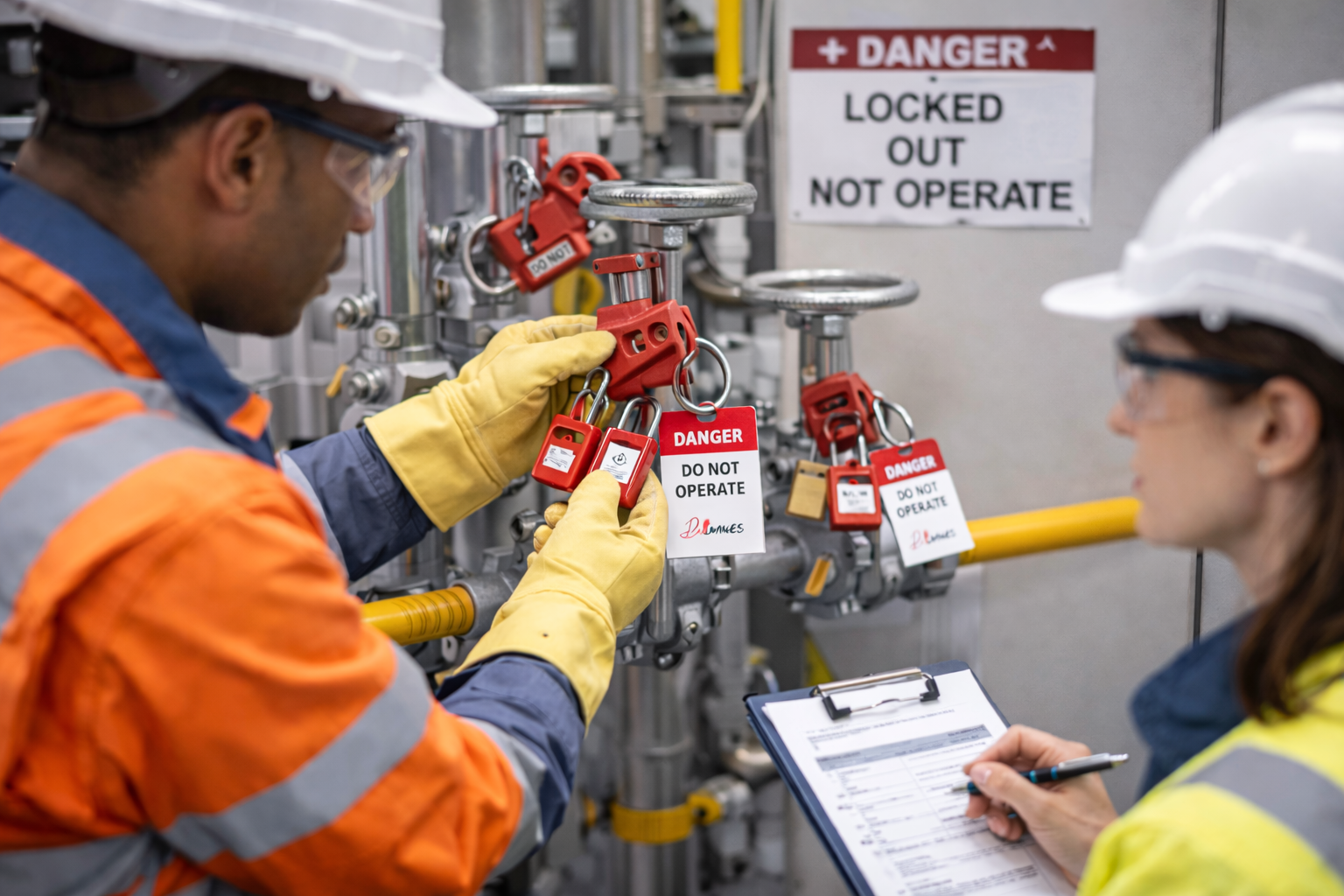
Mechanical system Isolation and Lock Out/Tag Out
COURSE CODE: CTS_NA_MECH_LOTO_013
-
The course is designed to equip learners with the knowledge and practical skills required to safely isolate mechanical systems prior to maintenance, inspection, or repair activities.
Participants will develop competence in identifying mechanical energy sources, including moving parts, stored mechanical energy, and associated hazards, and in applying correct isolation and Lock-Out/Tag-Out (LOTO) techniques to prevent the unexpected release of energy.
The training includes exposure to a range of mechanical systems and isolation scenarios—such as rotating equipment, conveyors, drives, and guarded machinery—to broaden understanding of mechanical isolation principles across different plant and equipment.
Upon completion of this course, learners will be proficient in isolating mechanical systems and applying LOTO controls to ensure machinery is safely secured and rendered inoperable before work commences.
-
The target learners for this course are workers who are required to isolate, control, or verify mechanical systems prior to maintenance, inspection, servicing, or repair activities.
This includes, but is not limited to:
Mechanical tradespersons and fitters
Maintenance technicians and maintenance supervisors
Plant operators and production personnel
Electrical workers and multi-skilled trades working around mechanical plant
Team leaders, supervisors, and permit issuers responsible for authorising or overseeing mechanical isolations
The course is suitable for learners working in environments where mechanical hazards are present, including rotating machinery, conveyors, drives, presses, guarded equipment, and systems with stored mechanical energy.
Typical industry contexts include manufacturing, mining, processing facilities, utilities, transport, and industrial maintenance operations.
This training is appropriate for both new and experienced workers who are required to apply, monitor, or verify Lock-Out/Tag-Out (LOTO) procedures to ensure mechanical systems are safely isolated and secured before work commences.
-
Learning activities for this course are designed to develop both theoretical understanding and practical capability in isolating mechanical systems in accordance with workplace procedures and Work Health and Safety (WHS) requirements.
Learners will participate in a combination of the following activities:
Instructor-led theory sessions covering mechanical hazards, sources of mechanical energy, and legislative and organisational requirements for mechanical isolation and Lock-Out/Tag-Out (LOTO)
Hazard identification activities focused on recognising moving parts, stored mechanical energy, and associated risks in plant and machinery
Demonstration and guided practice in isolating mechanical systems, including the use of guards, interlocks, isolation points, and lock-out devices
Hands-on application of LOTO controls, including the fitting of locks, tags, and physical restraints to prevent unintended movement or start-up
Scenario-based practical tasks simulating real-world maintenance, inspection, and servicing activities requiring mechanical isolation
Use of workplace documentation, such as isolation procedures, permits, checklists, and handover records
Communication and handover exercises to practise confirming isolation status with supervisors, operators, and maintenance personnel
Review and reflection activities to reinforce safe work practices and correct application of mechanical isolation and LOTO procedures
These learning activities are conducted in a controlled training environment or simulated workplace setting and are designed to reflect current industry practices and site-specific mechanical isolation requirements.
-
On successful completion of this course, learners will be able to:
Identify mechanical hazards and energy sources associated with plant and machinery, including moving parts and stored mechanical energy.
Interpret workplace procedures and WHS requirements relating to mechanical isolation and Lock-Out/Tag-Out (LOTO).
Select and apply appropriate mechanical isolation methods to prevent unintended movement or start-up of machinery.
Apply Lock-Out/Tag-Out controls using approved locks, tags, and physical restraints in accordance with workplace procedures.
Verify mechanical isolation and system safety prior to the commencement of maintenance or servicing activities.
Communicate isolation status and handover requirements effectively with relevant personnel to ensure safe coordination of work.
-
1 day (8 hrs)
-
Learners are required to have the following to participate in this course:
Personal Protective Equipment (e.g. Hard Hat, Safety Footwear, Approved Hi-Vis Clothing, Safety Glasses)
Stationary (e.g. Pen, Pencil, etc.)
-
Learners will be assessed using a combination of the following methods:
Theory/Written Assessment (e.g. Short Answer Questions, Multiple Choice, Verbal Questioning Interview)
Direct Observation/Practical Assessment (e.g. conduct workplace/worksite hazard identification, risk assessment and recommend risk control measures).
-
participants must be currently working in, or preparing to work in, an environment where mechanical plant and equipment are operated, maintained, inspected, or serviced.
Learners should have:
A basic understanding of workplace health and safety (WHS) requirements
Experience working around mechanical plant, machinery, or equipment
The ability to follow documented mechanical isolation and Lock-Out/Tag-Out (LOTO) procedures
Authorisation from their employer or site controller to participate in practical mechanical isolation activities, where required
Language, Literacy and Numeracy (LLN) Requirements
To successfully participate in this course, learners must have sufficient LLN skills to:
Read and interpret mechanical isolation procedures, permits, safety signage, and warning labels
Accurately complete lock-out tags, isolation checklists, and permit-to-work documentation
Communicate isolation status, hazards, and handover information clearly with supervisors, operators, and maintenance personnel
Understand basic numerical information relevant to mechanical systems, such as equipment identification, sequence of isolation steps, and verification checks
This course is suitable for mechanical tradespersons, maintenance technicians, plant operators, supervisors, and other workers who are required to isolate, control, or verify mechanical systems as part of their role.
-
Awards:
This CTS program/course is a non-accredited skills development course.
Upon successful completion, learners will receive a certificate of attendance and completion.
Exclusions:
This course does not authorise participants to perform mechanical systems isolation, lock out/tag out or issue access authorities.
Additional enterprise authorisation, competency assessment, and system/process specific training may be required for those roles.
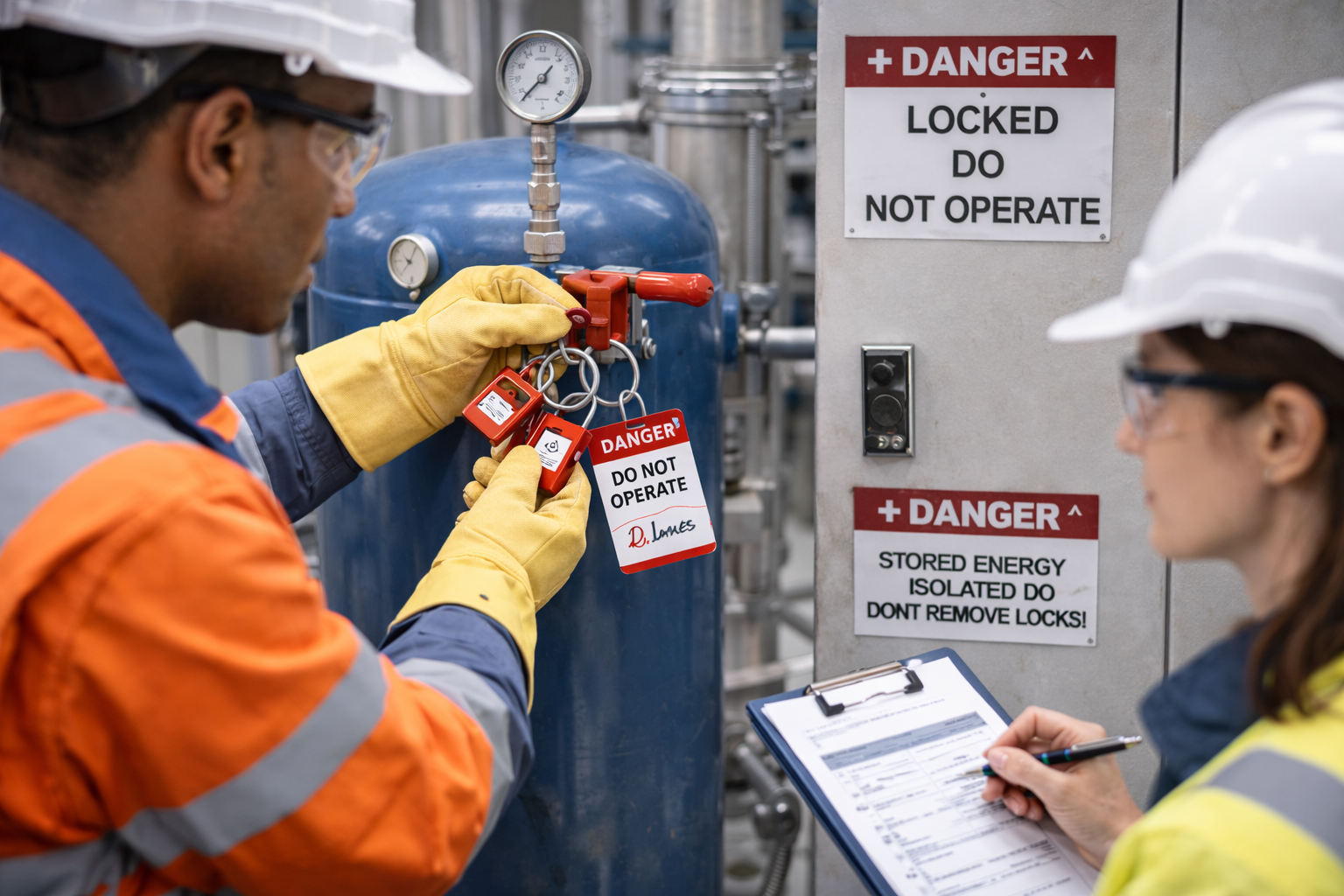
Stored Pressure and stored energy system Isolation and Lock Out/Tag Out
COURSE CODE: CTS_NA_SPSE_LOTO_014
-
The course is designed to equip learners with the knowledge and practical skills required to safely isolate stored pressure and stored energy systems prior to maintenance, inspection, or repair activities.
Participants will develop competence in identifying sources of stored energy—including hydraulic, pneumatic, mechanical, thermal, and gravitational energy—and applying correct isolation, dissipation, and Lock-Out/Tag-Out (LOTO) techniques to control hazardous energy.
The training includes exposure to a range of stored energy systems and isolation scenarios to broaden understanding of energy-control principles across different plant and equipment.
Upon completion of this course, learners will be proficient in isolating, releasing, and securing stored pressure and stored energy systems using approved LOTO procedures to ensure plant and equipment are in a safe state before work commences.
-
The target learners for this course are workers who are required to isolate, control, or verify stored pressure and stored energy systems as part of their role prior to maintenance, inspection, servicing, or repair activities.
This includes, but is not limited to:
Maintenance technicians and fitters
Electrical workers and electricians
Mechanical tradespersons and plant operators
Process plant and production personnel
Supervisors, team leaders, and permit issuers responsible for authorising or overseeing isolations
The course is suitable for learners working in environments where hazardous stored energy is present, including hydraulic, pneumatic, mechanical, thermal, and gravitational energy systems. Typical industry contexts include mining, manufacturing, processing facilities, utilities, energy, and industrial maintenance operations.
This training is appropriate for both new and experienced workers who are required to apply, monitor, or verify Lock-Out/Tag-Out (LOTO) procedures to ensure plant and equipment are safely isolated and secured before work commences.
-
Learners will participate in a combination of the following activities:
Instructor-led theory sessions covering stored energy hazards, energy-control principles, and legislative and organisational requirements for isolation and Lock-Out/Tag-Out (LOTO)
Hazard identification exercises focused on recognising hydraulic, pneumatic, mechanical, thermal, gravitational, and residual energy sources in plant and equipment
Demonstration and guided practice in isolating, dissipating, and securing stored energy using approved isolation devices, lock-out hardware, and warning tags
Scenario-based practical tasks simulating real-world maintenance and servicing activities requiring stored energy isolation and verification
Use of workplace documentation, including isolation procedures, permits, checklists, and handover records
Communication and handover activities to practise confirming isolation status with supervisors, team members, and permit holders
Review and reflection activities to reinforce safe work practices and correct application of LOTO procedures
These learning activities are conducted in a controlled training environment or simulated workplace setting and are designed to reflect current industry practices and site-based isolation requirements.
-
On successful completion of this course, learners will be able to:
Identify stored pressure and stored energy hazards associated with hydraulic, pneumatic, mechanical, thermal, gravitational, and residual energy systems.
Interpret workplace isolation procedures and WHS requirements relevant to stored energy control and Lock-Out/Tag-Out (LOTO) activities.
Select and apply appropriate isolation methods and devices to safely isolate and dissipate stored pressure and stored energy.
Apply Lock-Out/Tag-Out controls in accordance with approved procedures, including tagging, verification, and securing of isolation points.
Verify zero-energy states and system safety prior to commencement of work.
Communicate isolation status and handover requirements effectively with relevant personnel to ensure safe work coordination.
-
2 days (16 Hrs)
-
Personal Protective Equipment (e.g. Hard Hat, Safety Footwear, Approved Hi-Vis Clothing, Safety Glasses)
Stationary (e.g. Pen, Pencil, etc.)
Tools are optional. CTS does recommend you bring your own tools
-
Theory/Written Assessment (e.g. Short Answer Questions, Multiple Choice, Verbal Questioning Interview)
Direct Observation/Practical Assessment (e.g. Preparation and completion of HV transition joint between HV XLPE and PILS cable )
-
Participants must be currently working in, or preparing to work in, an environment where plant and equipment containing stored pressure or stored energy are operated, maintained, inspected, or serviced.
Learners should have:
A basic understanding of workplace health and safety (WHS) requirements
Experience working around plant, machinery, or energy systems
The ability to follow documented isolation and Lock-Out/Tag-Out (LOTO) procedures
Authorisation from their employer or site controller to participate in practical isolation activities, where required
Language, Literacy and Numeracy (LLN) Requirements
To successfully participate in this course, learners must have sufficient LLN skills to:
Read and interpret isolation procedures, permits, safety signage, and warning labels
Accurately complete lock-out tags, isolation checklists, and permit-to-work documentation
Communicate isolation status, hazards, and handover information clearly with supervisors and team members
Understand basic numerical information relevant to stored energy systems, such as pressure ratings, system identification, and isolation sequences
This course is suitable for maintenance personnel, tradespersons, plant operators, supervisors, and other workers who are required to isolate, control, or verify stored pressure and stored energy systems as part of their role.
-
Awards:
This CTS program/course is a non-accredited skills development course.
Upon successful completion, learners will receive a certificate of attendance and completion.
Exclusions:
This course does not authorise participants to perform stores pressure/stored energy systems isolation, lock out/tag out or issue access authorities.
Additional enterprise authorisation, competency assessment, and system/process specific training may be required for those roles.