
Electrical and mechanical Isolation Lock-Out/Tag-Out
COURSE CODE: CTS_NA__EMI_LOTO_GEN_001
-
The program is designed to strengthen and extend your practical capability in safely isolating electrical and mechanical plant and applying Lock-Out/Tag-Out systems.
It supports ongoing professional development by building deeper understanding of:
Legislative and regulatory requirements for isolations and LOTO
Enterprise procedures, site protocols, and permit-to-work systems
Energy-hazard identification and risk control
Applying and verifying isolations across electrical, mechanical, hydraulic, pneumatic, chemical, thermal, and stored-energy systems
Communicating isolations, handover processes, and reinstatement procedures
The course focuses on real-world workplace scenarios that reflect current industry expectations, ensuring your isolation practices are safe, compliant, and technically accurate.
-
This course is designed for licensed electricians, mechanical fitters, plant operators, and electrical or mechanical technicians working within the Australian Electricity Supply Industry, heavy industry, manufacturing, mining, utilities, and private industrial networks.
It is ideal for employees, contractors, and subcontractors responsible for isolating plant, equipment or electrical installations, or anyone required to apply Lock-Out/Tag-Out (LOTO) procedures as part of their role.
Participants are typically qualified tradespeople who already hold relevant electrical, mechanical, or high-risk work certifications. They operate in environments governed by strict WHS legislation, detailed safe-work systems, and structured isolation/permit-to-work processes. Their day-to-day work involves identifying energy sources, applying isolations, conducting risk assessments, and completing mandatory documentation before starting any maintenance or testing activities.
-
Delivery includes
Trainer led classroom presentations
Theory assessment
Workshop practical exercises and assessment
-
Learners will gain up-to-date knowledge and hands-on skills that align with WHS legislation, industry standards, and organisational safety requirements.
On completion, you will be able to:
Identify all types of hazardous energy in a workplace
Follow correct isolation and LOTO sequences for electrical and mechanical systems
Apply, secure, and verify isolations using approved devices
Complete isolation documentation, permits, and tags accurately
Communicate with work teams, permit holders, and control-room personnel
Perform safe reinstatement processes following task completion
§ Contribute to a safer workplace by confidently applying consistent, compliant isolation practices
This course helps ensure you work safely and competently when performing maintenance, repair, inspection, or testing activities on plant where hazardous energy sources must be controlled.
-
1 day (8 hrs)
-
Learners are required to have the following to participate in this course:
Personal Protective Equipment (e.g. Hard Hat, Safety Footwear, Approved Hi-Vis Clothing, Safety Glasses)
Stationary (e.g. Pen, Pencil, etc.)
-
Learners will be assessed using a combination of the following methods:
Theory/Written Assessment (e.g. Short Answer Questions, Multiple Choice, Verbal Questioning Interview)
Direct Observation/Practical Assessment (e.g. implement and apply LOTO procedures for electrical and mechanical isolation).
-
To participate in this course, learners are required to have:
CIII in Electrotechnology or equivalent.
NSW Department of Fair Trading unrestricted Electrical Qualified Supervisors Certificate or equivalent.
be literate in spoken English and competent in reading, writing, and numeracy (Language ACSF 3, Literacy ACSF 3, Numeracy ACSF 3)
be sufficiently fit to participate.
-
This CTS program/course is a non accredited skills development course.
Upon successful completion, learners will receive a certificate of attendance and completion.
Workplace hazards, Risks, Risk Assessment and Control
COURSE CODE: CTS_NA__WHRA_GEN_001
-
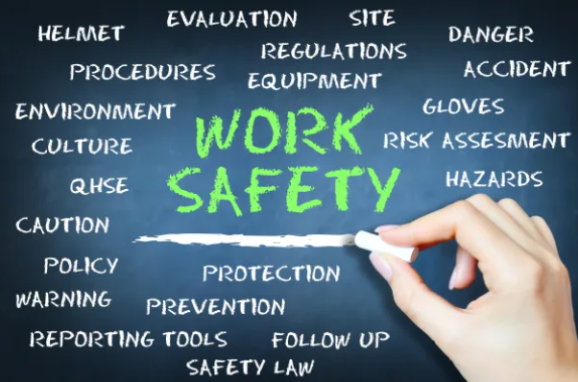
The program is designed to strengthen and extend your practical skills in recognising workplace hazards and applying effective risk-management strategies.
It supports ongoing professional development by focusing on current WHS legislation, industry best practice, and the practical techniques needed to identify hazards, assess risk levels, and implement appropriate control measures.
The course emphasises real workplace contexts and builds the confidence required to contribute to safer, more compliant worksites.
-
This course is designed for workers, supervisors, contractors, and frontline personnel across all industries, including construction, manufacturing, utilities, mining, warehousing, transport, agriculture, and community services.
It is ideal for anyone who performs tasks in environments where physical, chemical, electrical, biological, psychosocial, or environmental hazards may be present—and who must be able to correctly identify, assess, and control risks as part of daily work activities.
Participants may include qualified tradespeople, operators, team leaders, apprentices, and site personnel with existing WHS responsibilities or basic safety training. They typically operate in environments with structured safety systems, documented safe-work procedures, and established workplace risk-management processes. Their work often involves hazard identification, risk assessment, and contributing to safe work practices.
-
Delivery includes
Trainer led classroom presentations
Theory assessment
Workshop practical exercises and assessment
-
Learners will gain up-to-date knowledge and hands-on skills that align with WHS regulatory requirements and organisational safety standards.
On completion, participants will be able to:
• Identify common and industry-specific workplace hazards
• Assess risk using structured and recognised risk-assessment methods
• Apply the hierarchy of controls to eliminate or minimise risks
• Participate effectively in safety discussions, toolbox talks, and job hazard analyses
• Recognise early warning signs of unsafe conditions or behavioural risks
• Contribute to a proactive safety culture and continuous improvement processes
This training ensures that workers can confidently and consistently identify hazards, manage risks, and support safe work outcomes in any workplace environment.
-
1 day (8 hrs)
-
Learners are required to have the following to participate in this course:
Personal Protective Equipment (e.g. Hard Hat, Safety Footwear, Approved Hi-Vis Clothing, Safety Glasses)
Stationary (e.g. Pen, Pencil, etc.)
-
Learners will be assessed using a combination of the following methods:
Theory/Written Assessment (e.g. Short Answer Questions, Multiple Choice, Verbal Questioning Interview)
Direct Observation/Practical Assessment (e.g. conduct workplace/worksite hazard identification, risk assessment and recommend risk control measures).
-
To participate in this course, learners are required to have:
CIII in Electrotechnology or equivalent.
NSW Department of Fair Trading unrestricted Electrical Qualified Supervisors Certificate or equivalent.
be literate in spoken English and competent in reading, writing, and numeracy (Language ACSF 3, Literacy ACSF 3, Numeracy ACSF 3)
be sufficiently fit to participate.
-
This CTS program/course is a non accredited skills development course.
Upon successful completion, learners will receive a certificate of attendance and completion.
WORKING SAFELY NEAR OVERHEAD ELECTRICAL INFRASTRUCTURE AND EQUIPMENT
COURSE CODE: CTS_NA__WSNI_OHI_GEN_001
-
The course is designed to provide the learner with the knowledge and skills to enable them too safely joint PILC (paper Lead) to XLPE (Polymeric cables)
This enables the student to master
Lead wiping
Compression spring technology
The class will be exposed to SWA (Steel Wire Armouring) and other styles of PILC cables.
LV Consac cables are also taught in this module
-
The target learners for this course are employees currently working within the Australian Electricity Supply Industry. This includes employees of network asset owners, contractors and sub-contractors in electricity Generation, Transmission and Distribution.
Those who work on the network must maintain currency of skills and competency in a range of safety and technical competencies. Relevant safety related training programs are often mandated by regulation or industry agreements and documented in state codes of practice.
Most learners will be licensed and trade qualified or hold a Certificate in a related technical discipline. In addition to trade qualifications, the learner groups will have completed a range of electrical and plant safety related training programs related to the roles they hold. Due to the significant safety risks in the industry these employees work within highly proceduralised workplaces with mature workplace safety systems.
Workers in the industry are required to regularly complete workplace safety risk assessment and work planning documentation, and therefore bring a solid foundational understanding of risk assessment and workplace safety documentation concepts and practices to the program.
Workers who encounter and need to facilitate transition between HV Paper Insulated Lead Sheathed and HV Polymeric cables.
-
Trainer led classroom presentations
Theory assessment
Workshop practical exercises and assessment
Lead wiping and compression spring installation
-
On successful completion of the course a participant will be able to:
Understand and comply with relevant regulations and enterprise procedures.
Understand and identify the hazards associated with the work activity, site and site equipment.
Prepare to install transition joint between de-energised HV underground polymeric cable and HV Paper Insulated, Lead Sheathed cable.
Complete installation of transition joint between de-energised HV underground polymeric cable and HV Paper Insulated, Lead Sheathed cable.
Perform insulation resistance testing on completed transition joint between de-energised HV underground polymeric cable and HV Paper Insulated, Lead Sheathed cable.
Apply lead wiping techniques to HV Paper Insulated, Lead Sheathed cable.
Apply correct techniques for removal of Steel Wire and cleaning of sheathing of HV Paper Insulated, Lead Sheathed cable.
Apply correct techniques to repair the sheath of HV Paper Insulated, Lead Sheathed cable.
Understand the function and importance of insulating oils within HV Paper Insulated, Lead Sheathed cable.s
-
2 days (16 Hrs)
-
Personal Protective Equipment (e.g. Hard Hat, Safety Footwear, Approved Hi-Vis Clothing, Safety Glasses)
Stationary (e.g. Pen, Pencil, etc.)
Tools are optional. CTS does recommend you bring your own tools
-
Theory/Written Assessment (e.g. Short Answer Questions, Multiple Choice, Verbal Questioning Interview)
Direct Observation/Practical Assessment (e.g. Preparation and completion of HV transition joint between HV XLPE and PILS cable )
-
To participate in this course, learners are required to have:
CIII in Electrotechnology or equivalent.
NSW Department of Fair Trading unrestricted Electrical Qualified Supervisors Certificate or equivalent.
be literate in spoken English and competent in reading, writing, and numeracy (Language ACSF 3, Literacy ACSF 3, Numeracy ACSF 3)
be sufficiently fit to participate.
-
This CTS program/course is a non accredited skills development course.
Upon successful completion, learners will receive a certificate of attendance and completion.
WORKING SAFELY NEAR UNDERGROUND ELECTRICAL INFRASTRUCTURE AND EQUIPMENT
COURSE CODE: CTS_NA__WSNI_UGI_GEN_001
-
The course is designed to provide the learner with the knowledge and skills to enable them too safely joint PILC (paper Lead) to XLPE (Polymeric cables)
This enables the student to master
Lead wiping
Compression spring technology
The class will be exposed to SWA (Steel Wire Armouring) and other styles of PILC cables.
LV Consac cables are also taught in this module
-
The target learners for this course are employees currently working within the Australian Electricity Supply Industry. This includes employees of network asset owners, contractors and sub-contractors in electricity Generation, Transmission and Distribution.
Those who work on the network must maintain currency of skills and competency in a range of safety and technical competencies. Relevant safety related training programs are often mandated by regulation or industry agreements and documented in state codes of practice.
Most learners will be licensed and trade qualified or hold a Certificate in a related technical discipline. In addition to trade qualifications, the learner groups will have completed a range of electrical and plant safety related training programs related to the roles they hold. Due to the significant safety risks in the industry these employees work within highly proceduralised workplaces with mature workplace safety systems.
Workers in the industry are required to regularly complete workplace safety risk assessment and work planning documentation, and therefore bring a solid foundational understanding of risk assessment and workplace safety documentation concepts and practices to the program.
Workers who encounter the older style of cables, paper lead and need to transition to Polymeric cables.
-
Trainer led classroom presentations
Theory assessment
Workshop practical exercises and assessment
Logbook of workplace activities.
Lead wiping and compression spring installation
-
On successful completion of the course a participant will be able to:
Understand and comply with relevant regulations and enterprise procedures;
Understand and identify the hazards associated with the work activity, site and site equipment.
Complete installation and maintenance of de-energised XLPE Polymeric cables too PILC underground
How to lead wipe PILC cables
The correct way of removal of SWA and cleaning lead sheaths.
Repairs to lead sheaths if too much heat is applied
understanding of why the oils are so important in PILC cables.
-
5 days
-
Personal Protective Equipment (e.g. Hard Hat, Safety Footwear, Approved Hi-Vis Clothing, Safety Glasses)
Stationary (e.g. Pen, Pencil, etc.)
Tools are optional. CTS does recommend you bring your own tools
-
Theory/Written Assessment (e.g. Short Answer Questions, Multiple Choice, Verbal Questioning Interview)
Direct Observation/Practical Assessment (e.g. Workplace, Simulated Environment, Role Play/Scenario)
Portfolio (e.g. Logbook of Workplace Activities, Third Party Reports)
-
To participate in this course, learners are required to have:
CIII in Electrotechnology or equivalent.
NSW Department of Fair Trading unrestricted Electrical Qualified Supervisors Certificate or equivalent.
be literate in spoken English and competent in reading, writing, and numeracy (Language ACSF 3, Literacy ACSF 3, Numeracy ACSF 3)
be sufficiently fit to participate.
-
This CTS program/course is a non accredited skills development course.
Upon successful completion, learners will receive a certificate of attendance and completion.

WORKPLACE HEALTH AND SAFETY FOR SUPERVISORS
COURSE CODE: CTS_NA__WHS_SUPER_001
-
The course is designed to equip learners with the knowledge and practical skills required to identify, assess, and control electrical arc-flash hazards in the workplace.
Participants will develop a clear understanding of arc-flash risk factors, arc-flash boundaries, incident energy, and the correct selection and use of arc-rated personal protective equipment (PPE). The training includes exposure to a range of electrical installations and operating conditions to broaden hazard recognition and risk assessment capability.
Upon completion of this course, participants will be competent in applying arc-flash safety principles, maintaining safe approach distances, and performing electrical tasks in accordance with relevant WHS legislation, industry standards, and site safety procedures.
-
The target learners for this course are employees currently working, or intending to work, within the Electricity Supply Industry (ESI), Electrotechnology Sector, or Mining Industry where exposure to energised electrical equipment presents an arc-flash risk.
This includes employees of network asset owners, contractors, and sub-contractors engaged in electricity generation, transmission, and distribution, as well as electrical maintenance personnel operating in mining and heavy industrial environments.
Learners are expected to have a sound technical understanding of electrical systems, equipment, and associated hazards.
Arc-flash safety training is commonly mandated through legislation, industry agreements, enterprise procedures, or state-based codes of practice, and forms part of an organisation’s broader electrical safety and risk-management framework.
-
Trainer led classroom presentations
Theory assessment
Workshop practical exercises and assessment
Logbook of workplace activities.
Lead wiping and compression spring installation
-
Upon successful completion of this course/program, participants will be able to:
Identify Arc-Flash Hazards
Interpret Arc-Flash Information
Assess Arc-Flash Risk
Apply Safe Work Controls
Select and Use Arc-Rated PPE
Meet WHS Duties and Make Safe Decisions
-
5 days
-
Personal Protective Equipment (e.g. Hard Hat, Safety Footwear, Approved Hi-Vis Clothing, Safety Glasses)
Stationary (e.g. Pen, Pencil, etc.)
Tools are optional. CTS does recommend you bring your own tools
-
Theory/Written Assessment (e.g. Short Answer Questions, Multiple Choice, Verbal Questioning Interview)
Direct Observation/Practical Assessment (e.g. Workplace, Simulated Environment, Role Play/Scenario)
Portfolio (e.g. Logbook of Workplace Activities, Third Party Reports)
-
Learners entering this course must have a background in electrotechnology or electrical work environments where arc-flash hazards may be present.
It is recommended that learners:
Hold a relevant electrical trade qualification, electrical licence, or
Hold a Certificate III or higher qualification in a related technical discipline, or
Have equivalent industry experience in electrical, mining, or industrial environments
Learners are expected to have:
Prior exposure to electrical safety systems and procedures
Experience working in proceduralised, safety-critical environments
Non-trade applicants may be accepted where they can demonstrate:
A minimum of two (2) years of relevant industry experience in an electrical or cable-handling role, and
Evidence of working under established workplace safety and supervision arrangements
-
This CTS program/course is a non accredited skills development course.
Upon successful completion, learners will receive a certificate of attendance and completion.
WORKPLACE HEALTH AND SAFETY FOR SUPERVISORS
COURSE CODE: CTS_NA__ARC_GEN_001
-
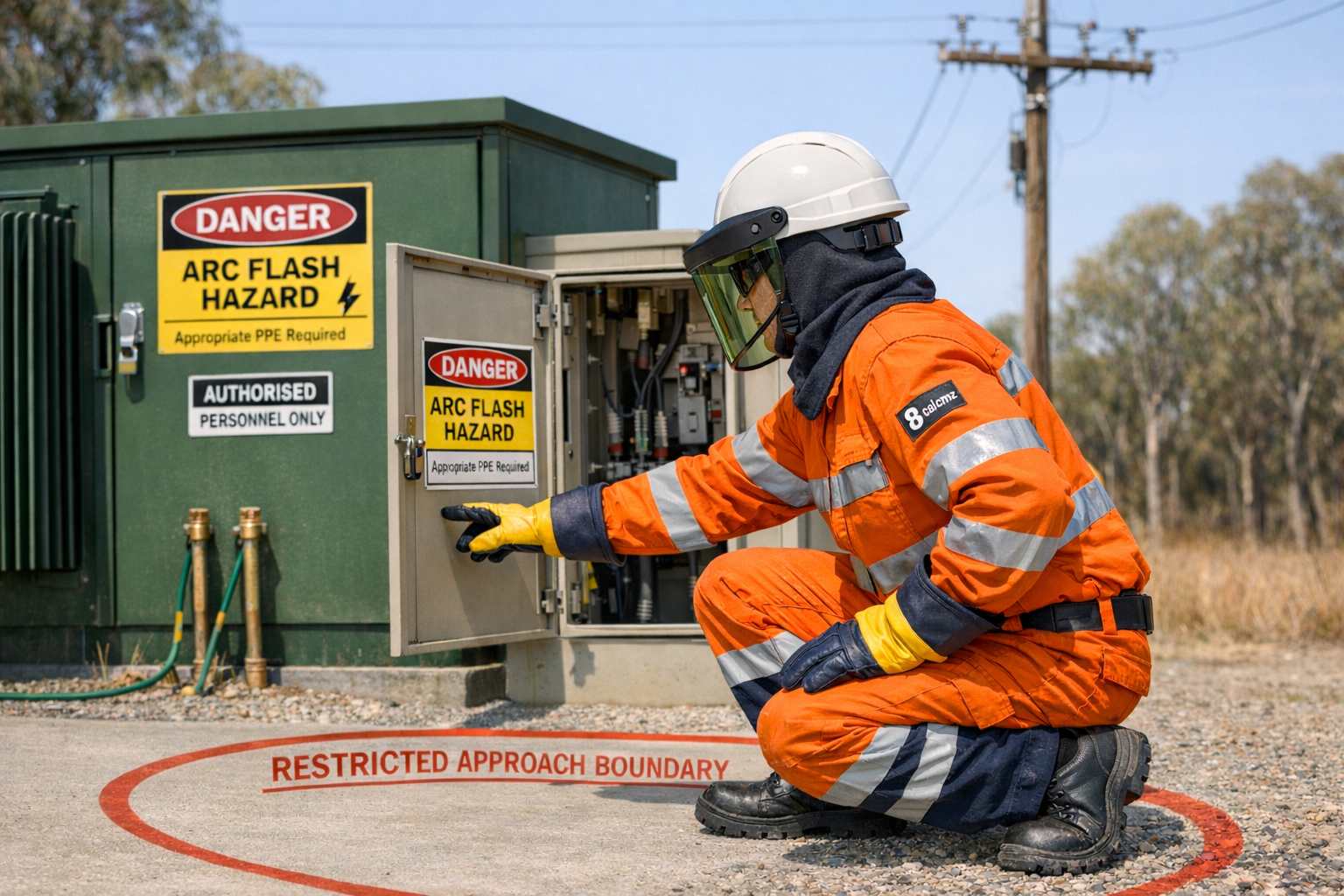
The course is designed to equip learners with the knowledge and practical skills required to identify, assess, and control electrical arc-flash hazards in the workplace.
Participants will develop a clear understanding of arc-flash risk factors, arc-flash boundaries, incident energy, and the correct selection and use of arc-rated personal protective equipment (PPE). The training includes exposure to a range of electrical installations and operating conditions to broaden hazard recognition and risk assessment capability.
Upon completion of this course, participants will be competent in applying arc-flash safety principles, maintaining safe approach distances, and performing electrical tasks in accordance with relevant WHS legislation, industry standards, and site safety procedures.
-
The target learners for this course are employees currently working, or intending to work, within the Electricity Supply Industry (ESI), Electrotechnology Sector, or Mining Industry where exposure to energised electrical equipment presents an arc-flash risk.
This includes employees of network asset owners, contractors, and sub-contractors engaged in electricity generation, transmission, and distribution, as well as electrical maintenance personnel operating in mining and heavy industrial environments.
Learners are expected to have a sound technical understanding of electrical systems, equipment, and associated hazards.
Arc-flash safety training is commonly mandated through legislation, industry agreements, enterprise procedures, or state-based codes of practice, and forms part of an organisation’s broader electrical safety and risk-management framework.
-
Trainer led classroom presentations
Theory assessment
Workshop practical exercises and assessment
Logbook of workplace activities.
Lead wiping and compression spring installation
-
Upon successful completion of this course/program, participants will be able to:
Identify Arc-Flash Hazards
Interpret Arc-Flash Information
Assess Arc-Flash Risk
Apply Safe Work Controls
Select and Use Arc-Rated PPE
Meet WHS Duties and Make Safe Decisions
-
5 days
-
Personal Protective Equipment (e.g. Hard Hat, Safety Footwear, Approved Hi-Vis Clothing, Safety Glasses)
Stationary (e.g. Pen, Pencil, etc.)
Tools are optional. CTS does recommend you bring your own tools
-
Theory/Written Assessment (e.g. Short Answer Questions, Multiple Choice, Verbal Questioning Interview)
Direct Observation/Practical Assessment (e.g. Workplace, Simulated Environment, Role Play/Scenario)
Portfolio (e.g. Logbook of Workplace Activities, Third Party Reports)
-
Learners entering this course must have a background in electrotechnology or electrical work environments where arc-flash hazards may be present.
It is recommended that learners:
Hold a relevant electrical trade qualification, electrical licence, or
Hold a Certificate III or higher qualification in a related technical discipline, or
Have equivalent industry experience in electrical, mining, or industrial environments
Learners are expected to have:
Prior exposure to electrical safety systems and procedures
Experience working in proceduralised, safety-critical environments
Non-trade applicants may be accepted where they can demonstrate:
A minimum of two (2) years of relevant industry experience in an electrical or cable-handling role, and
Evidence of working under established workplace safety and supervision arrangements
-
This CTS program/course is a non accredited skills development course.
Upon successful completion, learners will receive a certificate of attendance and completion.