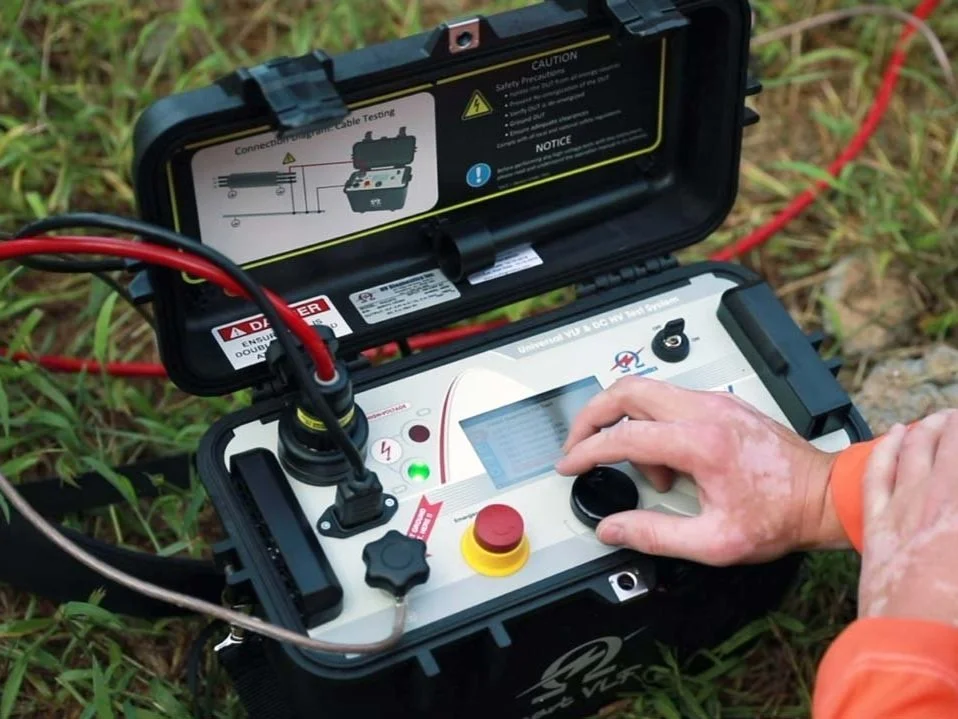
Very Low Frequency (VLF) Electrical Testing Techniques
Course Code: CTS_na_VLF_TEST_GEN_001
-
This course aims to develop participant capability to safely plan, set up, and conduct Very Low Frequency (VLF) electrical testing on medium-voltage cable systems in accordance with industry standards and site safety requirements.
It builds underpinning knowledge of VLF withstand and Tan Delta testing principles, combined with practical skills in equipment preparation, cable earthing, voltage selection, and test execution.
Through structured theory sessions and supervised workshop simulations, learners apply insulation resistance testing and VLF test methods to representative cable systems, interpret results, and follow documented procedures aligned with IEEE 400.2:2024, supporting safe, consistent, and defensible testing outcomes in real-world electrical environments.
-
This course is designed for electrical workers and technical personnel who are required to prepare for, conduct, or support Very Low Frequency (VLF) electrical testing of medium-voltage cable systems in operational or maintenance environments.
It is suitable for licensed electricians, electrical technicians, cable jointers, commissioning and maintenance staff, and engineering or asset-management personnel who work with underground or shielded MV cables and associated testing equipment.
The course is also appropriate for supervisors and safety or quality personnel who need a practical understanding of VLF and Tan Delta testing processes to oversee testing activities, verify compliance with procedures and standards, and support safe, reliable cable testing practices in the field.
This program is specifically designed for electricians and technicians who are looking to further develop their skills and knowledge in the testing of medium voltage systems. It targets professionals who are already working in the electrical industry and wish to enhance their expertise in this specialised area.
Course content is tailored to support the ongoing professional development of participants by focusing on the practical and technical aspects of medium voltage system testing, ensuring that learners are equipped with the up-to-date competencies required for safe and effective workplace practices.
-
Facilitated theory sessions covering:
Electrical insulation fundamentals and degradation mechanisms in medium-voltage cables
Principles and applications of Very Low Frequency (VLF) withstand testing
Overview of Tan Delta testing, including purpose, indicators, and limitations
Relevant industry standards, procedures, and documentation requirements, with emphasis on IEEE 400.2:2024
Safety and preparation activities, including:
Hazard identification and risk controls specific to MV cable testing
Cable identification, isolation, and verification of de-energised status
Earthing, discharge, and safe approach practices prior to and after testing
Practical workshop activities using representative MV cable samples and test equipment:
Pre-test inspections and equipment checks
Connection and configuration of insulation resistance testers and VLF instruments
Voltage selection, ramp-up, hold, and controlled shutdown procedures
Application of correct earthing and discharge methods following testing
Simulated testing scenarios that enable participants to:
Conduct insulation resistance and VLF tests under supervision
Observe and respond to instrument indications and abnormal conditions
Apply correct fault-prevention and error-reduction techniques
Guided learning exercises and discussions, including:
Completion of test setup checklists and basic test records
Introduction to result observation and high-level interpretation
Facilitated debriefs linking practical outcomes to safe work practices, site procedures, and industry expectations
-
On successful completion of this course, participants will be able to:
Explain the purpose, principles, and limitations of Very Low Frequency (VLF) withstand testing and Tan Delta testing for medium-voltage cable systems
Identify relevant safety, procedural, and standards-based requirements applicable to VLF cable testing, including alignment with IEEE 400.2:2024
Prepare medium-voltage cables and associated test equipment for VLF testing in accordance with documented procedures and safe work practices
Apply correct cable isolation, earthing, and discharge methods before, during, and after testing activities
Set up and operate insulation resistance testers and VLF instruments to perform basic cable testing tasks under controlled conditions
Select and apply appropriate test voltages and sequences based on cable type, rating, and test objectives
Recognise normal and abnormal test indications and respond appropriately in line with procedures and safety requirements
Record test setup details and results accurately using standard test documentation and checklists
Demonstrate safe, methodical, and compliant behaviour when conducting VLF testing activities in simulated or workplace-representative environments
-
1 day (8 hrs)
-
Course Participation Requirements
To participate in this course, learners must have specific items and equipment to ensure safety and effective engagement in all activities. These requirements are outlined below:
Personal Protective Equipment (PPE)
All participants are required to bring and wear appropriate Personal Protective Equipment (PPE) for the duration of the course. The necessary PPE includes:
Hard Hat
Safety Footwear
Approved Hi-Vis Clothing
Safety Glasses
Cut proof Glove
This equipment is essential to ensure personal safety while undertaking practical tasks and engaging in site activities.
Stationery
Each learner should bring essential stationery items to record notes and complete course exercises. Required items include:
Pen
Pencil
Other general writing materials as needed
Hand Tools
For practical components of the course, participants are expected to have a selection of hand tools. These may include:
Pliers
Tape measure
Sockets
Other general hand tools relevant to the course tasks,
Insulation testers will be made available
-
Learners will be assessed using a combination of the following methods:
Theory/Written Assessment (e.g. Short Answer Questions, Multiple Choice, Verbal Questioning Interview)
Direct Observation/Practical Assessment (e.g. completion of joint and/or termination on a de-energised HV polymeric cable).
-
To participate safely and effectively in this course, learners are expected to meet the following entry requirements:
Electrical knowledge and experience
Hold a current electrical licence, electrical trade qualification, or be employed in an electrical or cable-related role under appropriate supervision
Have a basic understanding of electrical principles relevant to low- and medium-voltage systems
Workplace safety readiness
Be familiar with general electrical safety practices, isolation procedures, and the use of personal protective equipment (PPE)
Be physically capable of performing practical workshop activities, including handling test leads, cables, and portable test equipment
Language and literacy:
Sufficient English language skills to read and interpret safety instructions, test procedures, warning labels, and standard forms
Ability to follow verbal instructions, participate in discussions, and complete basic written test records and checklists
Numeracy:
Ability to recognise and work with basic electrical values and units (e.g. volts, kilovolts, time, frequency)
Ability to read digital instrument displays and apply simple numerical comparisons when setting test voltages or observing results
Technology requirements
Basic digital skills to operate electronic test instruments and, where applicable, view or enter simple data on a laptop or test interface
-
This CTS program/course is a non-accredited skills development course.
Upon successful completion, learners will receive a certificate of Competition.
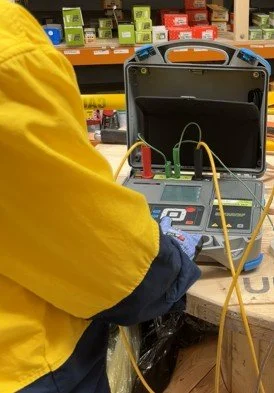
TESTING CIRCUIT BREAKERS USING VLF TEST TECHNIQUES
Course Code: CTS_na_TEST_cB_011
-
This course aims to develop participant capability to safely prepare for and conduct Very Low Frequency (VLF) testing on medium-voltage circuit breakers in accordance with industry standards and safe work practices.
It provides underpinning knowledge of VLF test principles and their application to circuit breaker insulation systems, combined with practical skills in equipment setup, test configuration, earthing, and controlled voltage application.
Through structured theory and supervised workshop simulations, learners apply insulation resistance testing and VLF test techniques to representative circuit breaker assemblies, supporting accurate condition assessment, safe operation, and compliant testing outcomes aligned with IEEE 400.2:2024 and workplace procedures.
-
This course is designed for electrical workers and technical personnel who are required to test, commission, maintain, or assess medium-voltage circuit breakers using Very Low Frequency (VLF) test techniques.
It is suitable for licensed electricians, electrical technicians, commissioning engineers, protection and maintenance staff, and asset-management personnel working with MV switchgear and circuit breaker assemblies in utilities, industrial, mining, and infrastructure environments.
The course is also appropriate for supervisors, test engineers, and safety or quality personnel who need a practical understanding of VLF testing methods for circuit breakers in order to oversee testing activities, verify compliance with procedures and standards, and support safe, reliable operation of medium-voltage switchgear assets.
-
Facilitated theory sessions covering:
Construction and insulation systems of medium-voltage circuit breakers
Principles and applications of Very Low Frequency (VLF) testing for circuit breakers
Differences between VLF testing of cables and switchgear, including limitations and considerations
Relevant industry standards, manufacturer guidance, and workplace procedures applicable to MV circuit breaker testing
Safety and preparation activities, including:
Hazard identification and risk controls specific to testing MV switchgear and circuit breakers
Isolation, lock-out/tag-out, and verification of de-energised status
Safe access to switchgear, approach distances, PPE requirements, and exclusion zones
Earthing, discharge, and residual voltage management for circuit breaker components
Practical workshop activities using representative circuit breaker equipment and test instruments:
Pre-use inspection and functional checks of insulation resistance testers and VLF test sets
Connection of VLF test leads to circuit breaker poles and associated insulation systems
Configuration of test parameters, voltage selection, ramp-up, hold, and controlled shutdown procedures
Application of correct earthing and discharge practices before and after testing
Simulated testing scenarios that enable participants to:
Perform insulation resistance and VLF tests on circuit breaker assemblies under supervision
Observe instrument responses and identify abnormal or unstable test indications
Apply correct responses to test irregularities in line with procedures and safety requirements
Guided learning exercises and discussions, including:
Completion of test setup checklists and circuit breaker test records
High-level interpretation of test observations in the context of asset condition and maintenance decisions
Facilitated debriefs linking testing outcomes to safe work practices, compliance obligations, and operational reliability
Delivery includes
Trainer led classroom presentations
Theory assessment
Workshop practical exercises and assessment
-
On successful completion of this course, participants will be able to:
Explain the purpose, principles, and limitations of Very Low Frequency (VLF) testing as applied to medium-voltage circuit breakers
Identify circuit breaker insulation systems and components relevant to VLF and insulation resistance testing
Apply relevant safety, isolation, and risk-control measures when preparing to test MV circuit breakers
Prepare circuit breakers for testing, including isolation, verification of de-energised status, earthing, and discharge
Select appropriate test equipment, test configurations, and voltage levels for VLF testing of circuit breakers
Set up and operate insulation resistance testers and VLF test sets in accordance with procedures and manufacturer instructions
Conduct VLF test activities on circuit breaker assemblies under controlled conditions
Recognise normal and abnormal test indications and respond appropriately in line with workplace procedures
Accurately record test setup details and results using standard circuit breaker test documentation
Demonstrate safe, methodical, and compliant work practices when performing VLF testing of medium-voltage circuit breakers in simulated or workplace-representative environments
-
1/2 day (4hrs)
-
Learners are required to have the following to participate in this course:
Personal Protective Equipment (e.g. Hard Hat, Safety Footwear, Approved Hi-Vis Clothing, Safety Glasses)
Stationary (e.g. Pen, Pencil, etc.)
CTS will supply the Insulation testers form 1kV-10kV
-
Learners will be assessed using a combination of the following methods:
Theory/Written Assessment (e.g. Short Answer Questions, Multiple Choice, Verbal Questioning Interview)
Direct Observation/Practical Assessment (e.g. testing LV cable and HV cable.
Written recourses will be supplied
-
To ensure safe participation and effective learning, the following entry requirements apply:
Electrical qualification and experience
Hold a current electrical licence or recognised electrical trade qualification
Be employed in, or have recent experience within, an electrical role involving medium-voltage switchgear or circuit breakers
Possess foundational knowledge of electrical theory, including insulation, testing principles, and switchgear operation
Workplace safety readiness
Be familiar with electrical isolation procedures, lock-out/tag-out systems, and high-risk electrical work controls
Have experience using personal protective equipment (PPE) appropriate for MV switchgear environments
Be physically capable of performing practical testing activities, including handling VLF test leads and accessing switchgear panels
Language and literacy:
Ability to read and interpret electrical test procedures, safety instructions, warning signage, and manufacturer documentation
Ability to follow verbal instructions, participate in technical discussions, and complete written test records and checklists in English
Numeracy:
Ability to understand and work with electrical units and values (e.g. volts, kilovolts, frequency, time, insulation resistance)
Ability to select and apply appropriate test voltages and interpret digital instrument displays and numerical results
Technology requirements
Basic digital skills to operate electronic insulation resistance testers and VLF test equipment, and to view or record test data where required
To participate in this course, learners are required to have:
CIII in Electrotechnology or equivalent.
NSW Department of Fair Trading unrestricted Electrical Qualified Supervisors Certificate or equivalent.
be literate in spoken English and competent in reading, writing, and numeracy (Language ACSF 3, Literacy ACSF 3, Numeracy ACSF 3)
be sufficiently fit to participate.
-
This CTS program/course is a non-accredited skills development course.
Upon successful completion, learners will receive a certificate of completion.
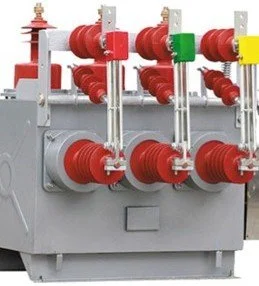
INSULATION TESTING Techniques for high voltage cables (1-10Kv)
Course Code: CTS_na_INSU_TEST_AWARE_007
-
This course aims to develop participant capability to safely and effectively carry out insulation resistance testing on high-voltage cable systems using test equipment within the 1,000–10,000 volt range.
It focuses on building both theoretical understanding and practical proficiency in the selection, setup, and use of insulation resistance test instruments, with emphasis on safe work practices, correct test methods, and accurate interpretation of results.
Through structured learning and hands-on testing activities, participants strengthen their technical confidence and competence in HV insulation testing, supporting reliable condition assessment, fault prevention, and compliant testing outcomes in operational electrical environments.
-
This course is intended for qualified and licensed electricians who are required to perform, supervise, or support insulation resistance testing on medium- and high-voltage cable systems using testing equipment within the 1,000–10,000 volt range.
It is suited to electricians working in industrial, utilities, mining, infrastructure, and commercial environments where HV cable installation, commissioning, maintenance, or fault-finding activities are undertaken.
The course is also appropriate for electrical technicians, commissioning personnel, and maintenance supervisors who already possess core electrical competencies and wish to extend their skills into high-voltage insulation testing to improve diagnostic capability, testing confidence, and compliance with workplace procedures and industry expectations.
-
Facilitated theory sessions covering:
Electrical insulation fundamentals and common degradation mechanisms in medium- and high-voltage cables
Principles and purpose of insulation resistance (IR) testing for HV cable systems (1,000–10,000 V)
Selection and limitations of insulation resistance testers and test voltage ranges
Relevant standards, manufacturer guidance, and workplace procedures for HV insulation testing
Safety and preparation activities, including:
Hazard identification and risk controls specific to HV cable testing
Isolation, lock-out/tag-out, and verification of de-energised status
Safe approach distances, PPE requirements, and exclusion zone considerations
Cable identification, inspection, and test readiness checks
Practical workshop activities using representative HV cable samples and test equipment:
Pre-use inspection and functional checks of insulation resistance testers
Connection of test leads and correct application of test voltages
Performing insulation resistance tests on single- and multi-core HV cables
Controlled discharge and earthing of cables following testing
Simulated testing scenarios that enable participants to:
Conduct IR testing under supervision in realistic maintenance and commissioning contexts
Observe instrument behaviour and identify abnormal or unstable readings
Apply correct shutdown, discharge, and fault-prevention techniques
Guided learning exercises and discussions, including:
Completion of test checklists and basic test records
High-level interpretation of insulation resistance results and trends
Facilitated debriefs linking test outcomes to asset condition, maintenance decisions, and safe work practices
-
On successful completion of this course, participants will be able to:
Explain the purpose and principles of insulation resistance testing for high-voltage cable systems.
Identify hazards and apply appropriate risk controls and safe work practices when conducting HV insulation testing
Select suitable insulation resistance test equipment and test voltages based on cable type, rating, and test objectives
Prepare high-voltage cables for testing, including isolation, identification, and verification of a de-energised state
Correctly connect test leads and operate insulation resistance testers in accordance with procedures and manufacturer instructions
Perform insulation resistance tests on single- and multi-core HV cables under controlled conditions
Apply correct earthing and discharge methods before and after testing to ensure safety
Recognise normal, abnormal, and unstable test indications and respond in line with workplace procedures
Record test setup details and insulation resistance results accurately using standard documentation
Demonstrate safe, methodical, and compliant behaviour when carrying out HV insulation resistance testing in simulated or workplace-representative environments
-
2 days
-
Personal Protective Equipment (e.g. Hard Hat, Safety Footwear, Approved Hi-Vis Clothing, Safety Glasses)
Stationary (e.g. Pen, Pencil, etc.)
Tools are optional. CTS does recommend you bring your own tools
-
Theory/Written Assessment (e.g. Short Answer Questions, Multiple Choice, Verbal Questioning Interview)
Direct Observation/Practical Assessment (e.g. Workplace, Simulated Environment, Role Play/Scenario)
-
To ensure safe participation and effective learning, the following entry requirements apply:
Electrical qualification and experience
Hold a current electrical licence or recognised electrical trade qualification
Be employed in, or have recent experience within, an electrical role involving low- or high-voltage systems
Possess foundational knowledge of electrical theory, including voltage, insulation, and basic testing concepts
Workplace safety readiness
Be familiar with electrical isolation procedures, lock-out/tag-out systems, and the use of personal protective equipment (PPE)
Be physically capable of performing practical testing activities, including handling HV test leads, cable terminations, and portable insulation testers
Language and literacy:
Ability to read and interpret electrical test procedures, safety instructions, warning labels, and basic standards or manufacturer guidance
Ability to follow verbal instructions and participate in technical discussions
Ability to complete basic written test records, checklists, and observations in English
Numeracy:
Ability to understand and work with electrical units and values (e.g. volts, kilovolts, megaohms, time)
Ability to select and apply appropriate test voltages and interpret digital meter displays and numerical results
Technology requirements
Basic digital skills to operate electronic insulation resistance testers and, where applicable, interact with simple digital interfaces or data displays
-
This CTS program/course is a non accredited skills development course.
Upon successful completion, learners will receive a certificate of attendance and completion.