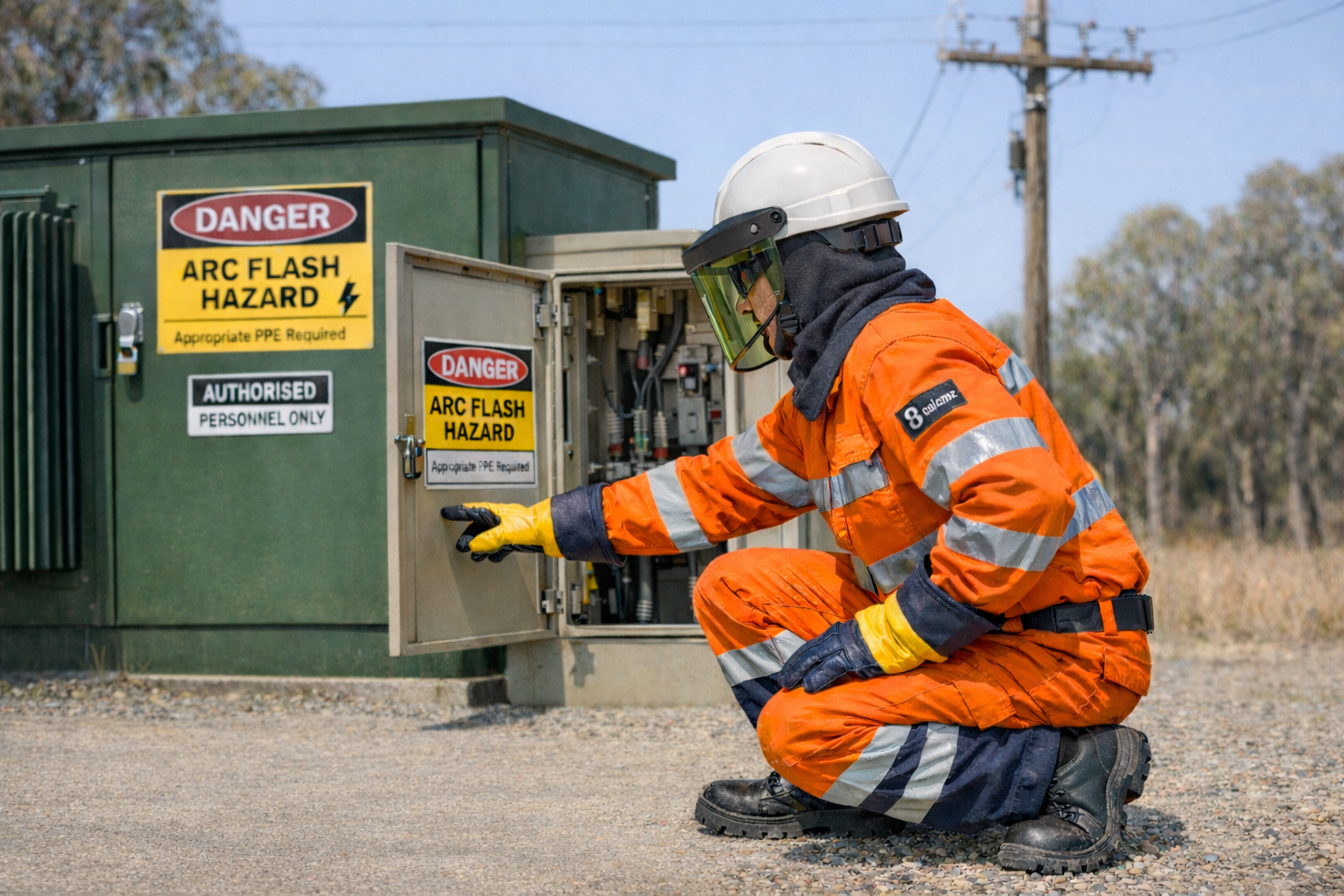
Electrical Arc Flash and safe work practices
COURSE CODE: CTS_NA_eaf_SWP_015
-
This program is designed to strengthen and extend your practical capability to work safely on or near electrical equipment where arc-flash hazards may be present. It focuses on recognising arc-flash risks, applying effective risk controls, and implementing safe systems of work in accordance with legislative, regulatory, and enterprise requirements.
The course supports ongoing professional development by building a deeper understanding of:
Legislative and regulatory duties relating to electrical safety, arc-flash hazard management, and safe work practices
Electrical risk management principles, including arc-flash hazard identification, risk assessment, and control selection
Enterprise electrical safety procedures, site rules, and permit-to-work systems
Safe isolation, verification of de-energisation, and control of stored electrical energy
Selection, use, and limitations of arc-rated PPE and safety equipment
Establishing approach boundaries, exclusion zones, and safe work distances
Communicating electrical hazards, coordinating work activities, and managing handover and reinstatement processes
The course emphasises real-world workplace scenarios drawn from electrical, industrial, mining, and electricity supply industry environments. These scenarios reflect current industry expectations and best practice, ensuring participants can apply arc-flash risk controls confidently and consistently to achieve safe, compliant, and technically sound outcomes in the workplace.
-
This course is designed for workers, supervisors, contractors, and frontline personnel who perform work on or near electrical equipment where arc-flash hazards and other electrical risks may be present. It is particularly relevant to those working within the electricity supply industry, industrial facilities, manufacturing, mining, construction, utilities, transport infrastructure, and large commercial or institutional environments.
The course is ideal for individuals who undertake inspection, testing, maintenance, fault-finding, or operational tasks in electrical environments and who are required to identify arc-flash hazards, assess electrical risks, and apply effective risk controls as part of their day-to-day work activities.
Participants may include licensed electricians, electrical tradespersons, electrical fitters and technicians, supervisors, team leaders, apprentices, and authorised non-electrical workers who interact with electrical plant.
Learners typically operate within workplaces that have established electrical safety management systems, permit-to-work processes, isolation procedures, and documented safe work instructions. Their roles often involve contributing to electrical risk assessments, complying with arc-flash controls, and maintaining safe work practices in accordance with WHS and enterprise requirements.
-
Delivery includes
Trainer led classroom presentations
Theory assessment
Workshop practical exercises and assessment
-
On successful completion of this course, participants will be able to:
Identify arc-flash hazards and associated electrical risks in workplace environments, including sources of incident energy, fault conditions, and potential consequences to people and equipment.
Interpret and apply legislative, regulatory, and enterprise requirements relating to electrical safety, arc-flash risk management, and safe systems of work.
Conduct electrical risk assessments that consider arc-flash hazards, approach boundaries, stored energy, and task-specific exposure.
Select and apply appropriate risk control measures using the hierarchy of controls, including isolation, engineering controls, administrative controls, and arc-rated PPE.
Implement safe work practices for electrical tasks, including verification of de-energisation, establishment of exclusion zones, permit-to-work compliance, and control of stored electrical energy.
Communicate and coordinate electrical safety controls effectively, including hazard briefings, handovers, work reinstatement, and reporting of arc-flash risks and incidents.
This course supports workers and duty holders to meet their obligations under WHS legislation by ensuring arc-flash hazards are systematically identified, risks are assessed, and appropriate controls are implemented when undertaking electrical work activities.
-
1 day (8 hrs)
-
Learners are required to have the following to participate in this course:
Personal Protective Equipment (e.g. Hard Hat, Safety Footwear, Approved Hi-Vis Clothing, Safety Glasses)
Stationary (e.g. Pen, Pencil, etc.)
-
Learners will be assessed using a combination of the following methods:
Theory/Written Assessment (e.g. Short Answer Questions, Multiple Choice, Verbal Questioning Interview)
Direct Observation/Practical Assessment
-
To participate in this course, learners are required to have:
CIII in Electrotechnology or equivalent.
NSW Department of Fair Trading unrestricted Electrical Qualified Supervisors Certificate or equivalent.
be literate in spoken English and competent in reading, writing, and numeracy (Language ACSF 3, Literacy ACSF 3, Numeracy ACSF 3)
be sufficiently fit to participate.
-
This CTS program/course is a non accredited skills development course.
Upon successful completion, learners will receive a certificate of attendance and completion.
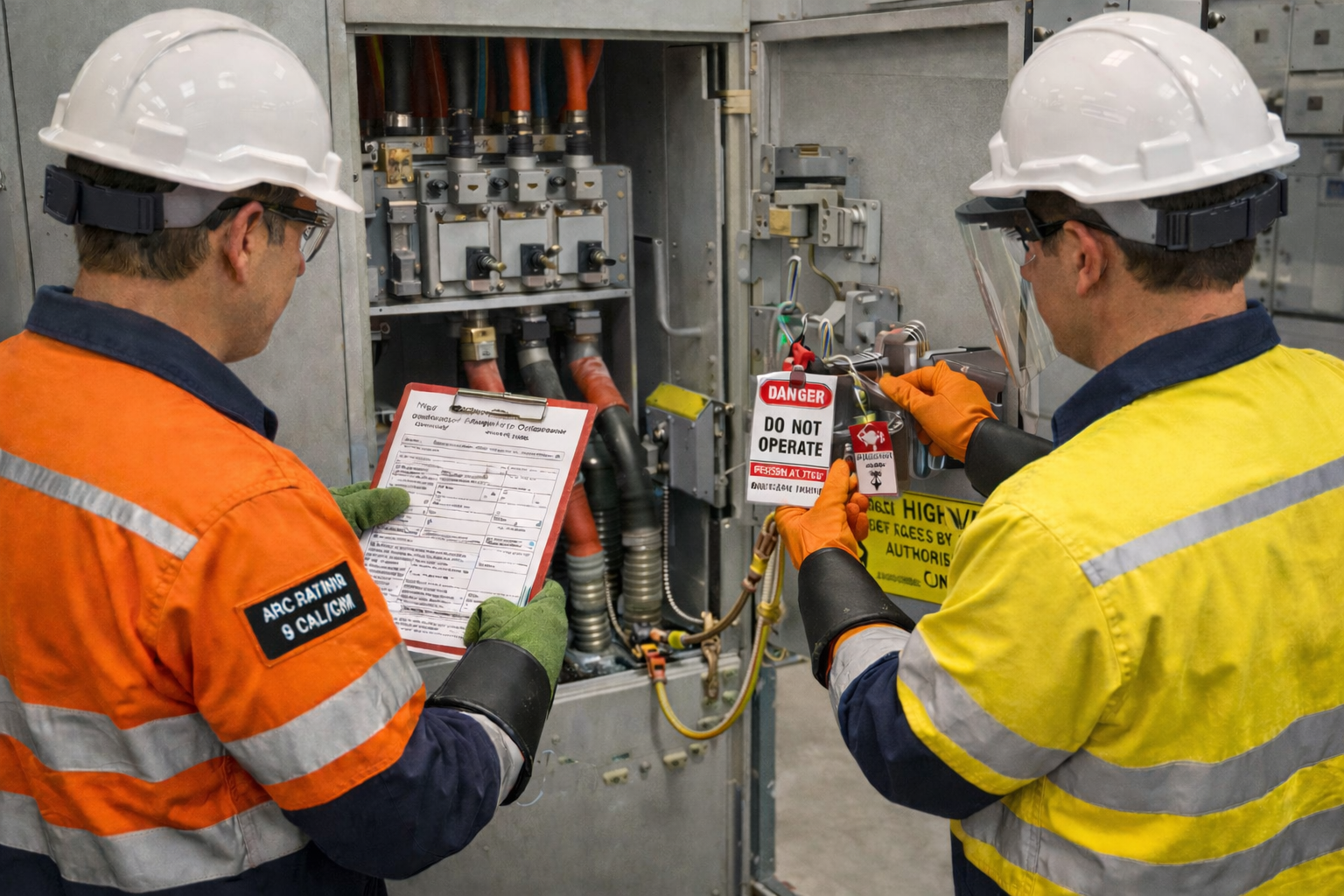
Introduction to High Voltage Access Procedures
COURSE CODE: CTS_NA_HVA_SWP_016
-
This program is designed to strengthen and extend your practical capability to safely plan, prepare for, and participate in high voltage (HV) access activities in accordance with established access procedures and safety systems. It focuses on the controlled management of HV risks prior to, during, and after access to HV electrical apparatus.
The course supports ongoing professional development by building a deeper understanding of:
Legislative and regulatory requirements governing high voltage electrical work and access control
Roles, responsibilities, and authorisations associated with HV access, including access authorities, switching operators, and workers
Enterprise HV safety rules, site protocols, and permit-to-work or access authority systems
Identification of HV hazards, including induced voltages, stored energy, and inadvertent re-energisation risks
Application and verification of HV isolations, earthing, and access points in accordance with approved procedures
Communication requirements, handover processes, and reinstatement of HV apparatus following completion of work
The course emphasises real-world workplace scenarios reflective of current electricity supply industry and industrial HV environments. These scenarios ensure participants can apply high voltage access procedures correctly and consistently, supporting safe, compliant, and technically accurate outcomes when working on or near HV electrical equipment.
-
This course is designed for workers, supervisors, contractors, and authorised personnel who are required to work on or near high voltage (HV) electrical apparatus and must operate within formal High Voltage Access Procedures (HVAP).
It is intended for individuals who participate in HV access activities under an access authority, including those involved in inspection, testing, maintenance, construction, commissioning, or operational tasks within electricity supply industry networks, industrial facilities, substations, switchrooms, and mining environments.
Participants may include electrical tradespersons, electrical fitters and technicians, apprentices under supervision, switching operators, safety observers, supervisors, and authorised non-electrical workers who are required to enter HV work areas or interact with HV plant. Learners typically work within organisations that have established HV safety rules, access authority systems, switching procedures, and permit-to-work frameworks.
The course is suitable for personnel who are new to HV environments or who require formal introduction or refresher training in HV access roles, responsibilities, and procedural compliance. It supports learners who must understand HVAP requirements to safely perform their duties, communicate effectively with access authorities, and comply with enterprise and regulatory high voltage safety obligations.
-
Delivery includes
Trainer led classroom presentations
Theory assessment
Workshop practical exercises and assessment
-
On successful completion of this course, participants will be able to:
Explain legislative, regulatory, and enterprise requirements governing high voltage access, including WHS duties, electrical safety rules, and HV access authorisation systems.
Identify high voltage hazards and access risks, including induced voltages, stored energy, backfeeds, inadvertent re-energisation, and adjacent live apparatus.
Describe HV access roles, responsibilities, and authorities, including the functions of access authorities, switching operators, safety observers, and authorised workers.
Apply high voltage access procedures by correctly following documented processes for isolation, earthing, proving de-energisation, and establishing safe access points.
Interpret and use HV access documentation, including access authorities, permits, switching sheets, and tagging/identification systems, in accordance with enterprise procedures.
Communicate and coordinate HV access activities effectively, including pre-work briefings, handovers, work completion notifications, and reinstatement of HV apparatus.
-
1 day (8 hrs)
-
Learners are required to have the following to participate in this course:
Personal Protective Equipment (e.g. Hard Hat, Safety Footwear, Approved Hi-Vis Clothing, Safety Glasses)
Stationary (e.g. Pen, Pencil, etc.)
-
Learners will be assessed using a combination of the following methods:
Theory/Written Assessment (e.g. Short Answer Questions, Multiple Choice, Verbal Questioning Interview)
Direct Observation/Practical Assessment (e.g. conduct workplace/worksite hazard identification, risk assessment and recommend risk control measures).
-
Participants entering this course must meet the following requirements to ensure safe participation and effective learning outcomes:
Mandatory Requirements
Be currently working in, or preparing to work in, an environment where high voltage electrical apparatus is present, and where High Voltage Access Procedures are applied.
Have completed general workplace WHS induction training, including hazard identification and risk control principles.
Possess basic electrical safety knowledge, including awareness of electrical hazards, isolation concepts, and safe work practices.
Be physically capable of working safely in HV environments, including the ability to wear required PPE, follow instructions, and maintain situational awareness.
Recommended (but not mandatory)
Hold a relevant electrical or technical qualification, or be an apprentice or trainee under appropriate supervision.
Have prior experience working in electrical, industrial, mining, or electricity supply industry environments.
Be familiar with permit-to-work systems, isolation procedures, or site safety rules.
Language, Literacy, and Numeracy (LLN) Requirements
Have sufficient language, literacy, and numeracy skills to:
Read and interpret HV access documentation, permits, and safety signage
Communicate clearly with access authorities and work teams
Complete basic records and follow written procedures
Exclusions
This course does not authorise participants to perform high voltage switching or issue access authorities.
Additional enterprise authorisation, competency assessment, and network-specific training are required for roles performing high voltage switching or issuing access authorities.
-
Awards:
This CTS program/course is a non accredited skills development course.
Upon successful completion, learners will receive a certificate of attendance and completion.
Exclusions:
This course does not authorise participants to perform high voltage switching or issue access authorities.
Additional enterprise authorisation, competency assessment, and network-specific training are required for those roles.
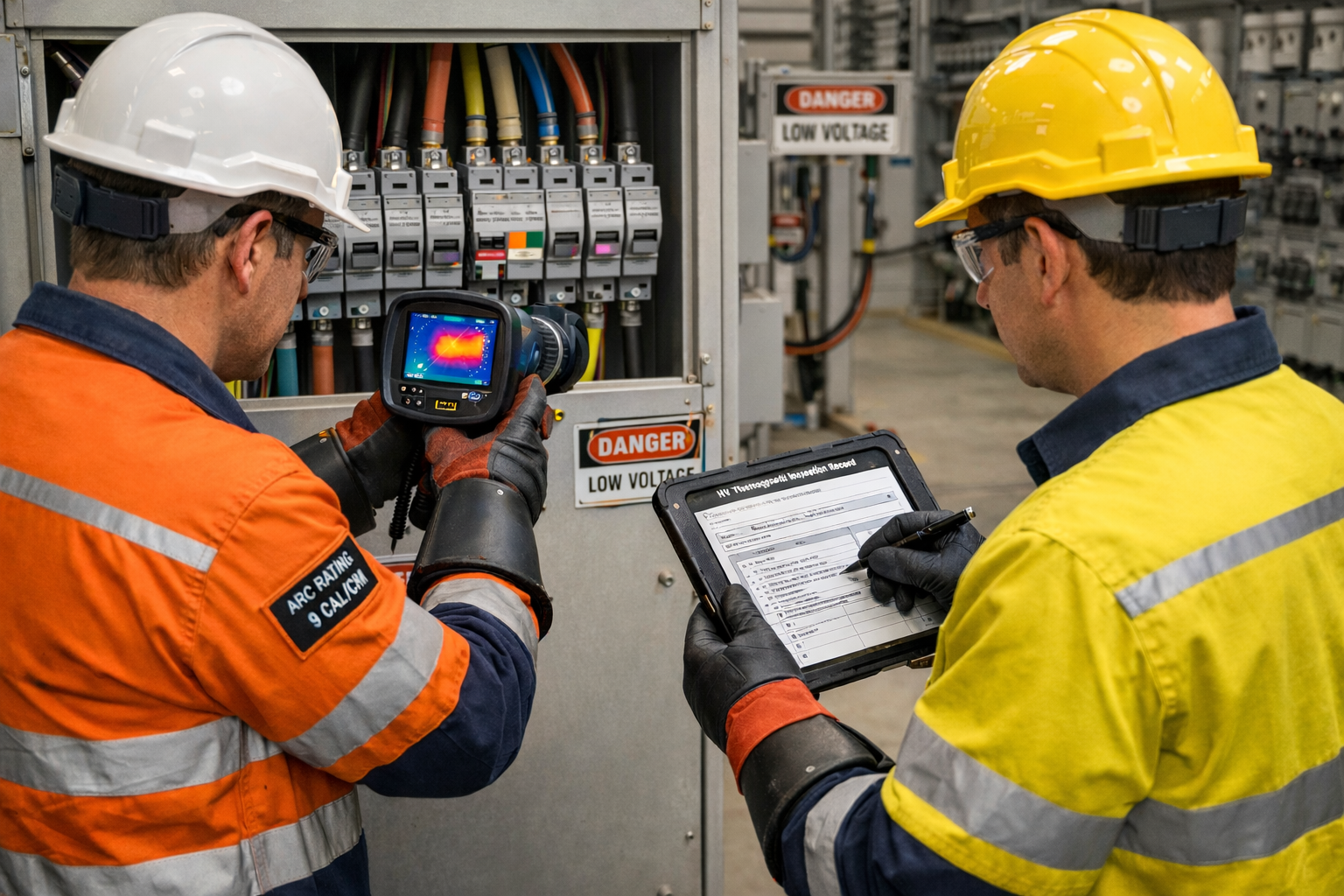
Basic Thermography
COURSE CODE: CCTS_NA_THERM_SWP_008
-
This program is designed to strengthen and extend your practical capability in conducting basic thermographic inspections to identify abnormal temperature conditions in electrical and mechanical plant. It focuses on the safe use of infrared (IR) equipment to support condition monitoring, fault detection, and preventative maintenance activities.
The course supports ongoing professional development by building a deeper understanding of:
Legislative and regulatory requirements relating to electrical safety, WHS obligations, and non-contact inspection activities
Enterprise procedures, site protocols, and permit-to-work systems applicable to thermographic inspections
Principles of heat transfer, emissivity, reflectivity, and factors affecting thermal image accuracy
Identification of common electrical and mechanical faults using thermography, including loose connections, overloads, phase imbalance, insulation degradation, and bearing or friction-related issues
Safe positioning, approach distances, and risk controls when performing thermographic inspections near energised equipment
Documentation, reporting, and communication of thermographic findings, including severity ranking and recommended follow-up actions
The course emphasises real-world workplace scenarios reflective of current industry practice across electrical, industrial, mining, and facilities environments. These scenarios ensure participants can apply basic thermography techniques safely, consistently, and accurately to support compliant inspections and informed maintenance decision-making.
-
This course is designed for workers, supervisors, and technicians who are required to conduct or support basic thermographic inspections as part of routine maintenance, condition monitoring, or safety activities.
It is intended for individuals working in electrical, mechanical, industrial, facilities management, utilities, mining, manufacturing, construction, and asset-intensive environments where infrared thermography is used to identify abnormal temperature conditions in plant and equipment.
Participants may include electricians, electrical tradespersons, maintenance fitters, mechanical technicians, facilities and asset maintenance staff, supervisors, team leaders, apprentices under supervision, and safety or reliability personnel who contribute to inspection and preventative maintenance programs.
Learners typically operate within workplaces that have established WHS systems, maintenance procedures, and permit-to-work arrangements. Their roles often involve observing equipment in service, identifying potential issues, recording findings, and reporting anomalies for further investigation by authorised or specialist personnel.
This course is suitable for personnel who are new to thermography or who require formal introductory training to safely and consistently perform basic infrared inspections in accordance with enterprise procedures and WHS requirements.
-
Trainer led classroom presentations
Theory assessment
Workshop practical exercises and assessment
Lead wiping and compression spring installation
-
On successful completion of this course, participants will be able to:
Explain the fundamental principles of thermography, including heat transfer, infrared radiation, emissivity, reflectivity, and factors that influence thermal image accuracy.
Identify workplace hazards and WHS requirements associated with thermographic inspections, including risks related to energised equipment, access limitations, and environmental conditions.
Prepare and operate basic infrared imaging equipment in accordance with manufacturer instructions and enterprise procedures, including correct camera setup and basic image capture techniques.
Conduct basic thermographic inspections of electrical and mechanical plant to identify abnormal temperature patterns indicative of common faults or developing issues.
Interpret and classify basic thermal anomalies, distinguishing normal operating conditions from potential defects that require further investigation or corrective action.
Document and communicate thermographic findings using basic reports, images, and observations to support maintenance decisions and follow-up actions..
-
2 days (16 Hrs)
-
Personal Protective Equipment (e.g. Hard Hat, Safety Footwear, Approved Hi-Vis Clothing, Safety Glasses)
Stationary (e.g. Pen, Pencil, etc.)
Tools are optional. CTS does recommend you bring your own tools
-
Theory/Written Assessment (e.g. Short Answer Questions, Multiple Choice, Verbal Questioning Interview)
Direct Observation/Practical Assessment (e.g. Preparation and completion of HV transition joint between HV XLPE and PILS cable )
-
Participants entering this course must meet the following requirements to ensure safe participation and effective learning outcomes:
Mandatory Requirements
Be currently working in, or preparing to work in, an environment where electrical or mechanical plant is present and where thermographic inspections may be undertaken.
Have completed general workplace WHS induction training, including hazard identification and risk control principles.
Possess basic safety awareness when working near energised equipment, including understanding of safe approach distances and site safety rules.
Be physically capable of safely performing inspection activities, including wearing required PPE, maintaining safe positioning, and following instructions.
Recommended (but not mandatory)
Hold a relevant trade, technical, or maintenance qualification, or be an apprentice or trainee under appropriate supervision.
Have prior experience in electrical, mechanical, industrial, facilities, mining, or utilities environments.
Be familiar with permit-to-work systems, isolation procedures, or maintenance reporting processes.
Language, Literacy, and Numeracy (LLN) Requirements
Have sufficient language, literacy, and numeracy skills to:
Read and interpret basic procedures, safety instructions, and equipment labels
Operate an infrared camera using menus and settings
Record observations and complete basic inspection reports
Exclusions and Scope Limitations
This course does not qualify participants as certified thermographers or authorise them to perform advanced diagnostic analysis.
Interpretation of results beyond basic anomaly identification, and decisions involving live electrical work, remain subject to enterprise authorisation and specialist competency requirements.
-
Awards
This CTS program/course is a non accredited skills development course.
Upon successful completion, learners will receive a certificate of attendance and completion.
Exclusions and Scope Limitations
This course does not qualify participants as certified thermographers or authorise them to perform advanced diagnostic analysis.
Interpretation of results beyond basic anomaly identification, and decisions involving live electrical work, remain subject to enterprise authorisation and specialist competency requirements.